Cincinnati’s Recommended Budget Calls for 201 Layoffs, Program Eliminations

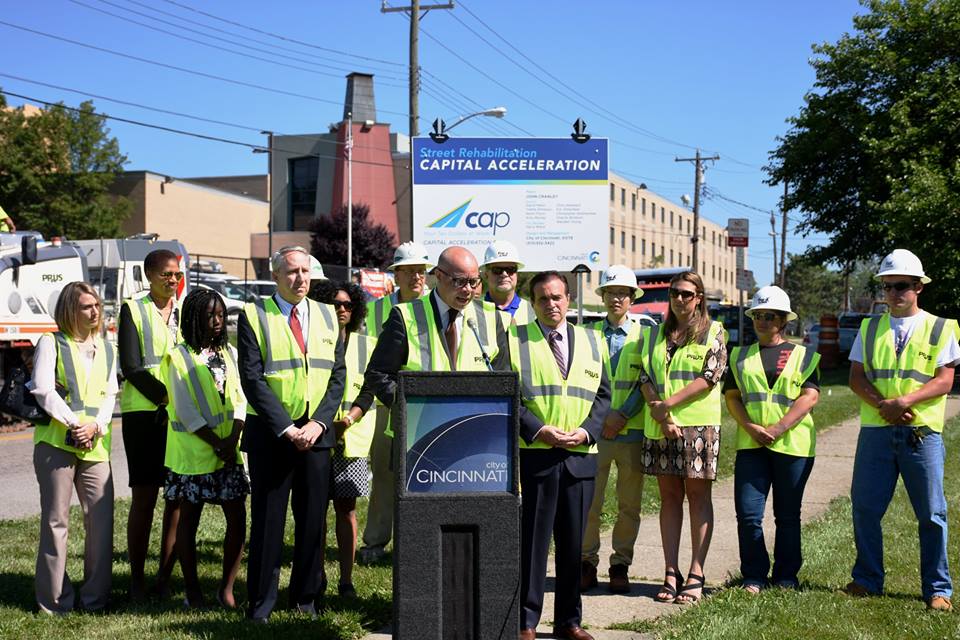
Cincinnati City Manager Milton Dohoney released his recommended budget that makes a large number of cuts to fill the $35 million budget gap left behind following the State of Ohio’s reduction of $26 million in funding to the City of Cincinnati.

The original budget proposal from Dohoney included $25.8 million from an upfront payment included in the parking lease and modernization plan, which would have also included $3 million in annual payments thereafter. This proposal was approved 5-4 by City Council, but was put on hold by a local court until opponents were able to file petitions and get the proposal put on this November’s ballot for public vote.

“Though a legal victory is being vigorously pursued, the ultimate resolution is not assured in time to affect what must be in place by June 1 to take effect July 1, 2013,” Dohoney explained. “Should a final legal victory be realized after July 1, the Administration would presume to move expeditiously to reverse some of the impacts of the cuts contained within the recommended budget.”

Cincinnati Mounted Patrol
Cincinnati’s mounted patrol would be cut entirely if City Council passes the recommended budget. Photograph by Randy Simes for UrbanCincy.

The end result of these cuts includes the elimination of 66 police officers, 71 fire fighters, 64 city employees, and the elimination of 60 vacant positions. The recommended budget will also eliminate funding for the following items:

  • Greater Cincinnati Energy Alliance ($150,000)
  • Urban Agricultural Program ($65,000)
  • Heritage Events Subsidy – Opening Day Parade, St. Patrick’s Day Parade, Black Family Reunion, Juneteenth ($36,000)
  • Camp Washington, Fairview, Filson, Spring Grove Village, and Ziegler Pools ($167,650)
  • Bush Recreation Center in Walnut Hills ($127,710)
  • Energy Management Program ($100,010)
  • Mounted Patrol ($95,000)
  • Community Prosecution Program ($83,857)
  • Delinquent Accounts/Receivables Program ($75,460)
  • Claims Program ($55,680)
  • Tire Collection Program ($30,880)

In addition to the elimination of these programs, no funding is budgeted for either 2014 or 2015 as a result of limited General Fund resources.

Furloughs for City Management staff will also take place, and the City of Cincinnati would also use a larger amount of projected casino revenues to balance this budget, even though Dohoney has recommended against that in the past due to the unpredictability of these funds.

“While balancing a budget deficit with mostly cuts is not preferred, the timing of the new fiscal year coupled with the timing of the litigation over the parking deal makes it the only real option with a number this large,” Dohoney stated in a prepared release. “Our goal is going to be to recall staff as soon as possible and provide the best customer service we can deliver for the citizens in the meantime.”

A number of other measures are taken in the recommended budget to help close the budget gap, but the large amount of savings is realized through personnel layoffs. Dohoney has also recommended that the property tax millage increase from 5.7 mills to its maximum allowed 6.1 mills to raise an additional $1.3 million annually.

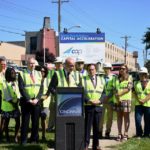
To help engage the public in this budget process, Cincinnati Vice Mayor Roxanne Qualls (C) has scheduled three public hearings. The first will take place at the Duke Energy Convention Center on Thursday, May 16 at 6:30pm, the second will occur on Monday, May 20 at 6:30pm at the College Hill Recreation Center, and the final meeting will take place at the Madisonville Recreation Center on Wednesday, May 22 at 6:30pm.

“My priority for the FY 2014 city operating budget is to make sure that all Cincinnati’s neighborhoods are safe and that we continue to attack blight that breeds crime,” Qualls stated. “As chair of the Budget and Finance Committee I will work to further reduce the number of layoffs for police, fire and health department personnel, to ensure that we keep all our neighborhoods safe and clean.”

Cincinnati Recognized for Recent Planning Successes, Historical Achievements at APA

Last month the American Planning Association (APA) held its annual conference for planning professionals. The 2013 conference was held in Chicago and organizers made efforts to showcase planning efforts of The Second City.

The educational sessions at the conference are made up of presentations by planning officials across the country. A few of the sessions were hosted by Cincinnati Planning officials who highlighted some of Cincinnati’s recent planning successes.

Of the three sessions that featured Cincinnati city planners, one actually focused on the recently adopted PLAN Cincinnati comprehensive plan.

The Banks
Cincinnati and Hamilton County received a national award from the APA for the implementation of the Central Riverfront Master Plan and The Banks. Photograph by Randy Simes for UrbanCincy.

The plan was approved by the city in October 2012 and is the first long-term comprehensive planning vision of the city since 1980. The seminar also highlighted Cincinnati’s rich planning heritage as the city carries the noteworthy distinction of drafting the first ever city-wide comprehensive plan in the 1925 Master Plan. That plan, along with the 1907 Kessler Parks Plan, envisioned a walkable cityscape with an extensive parks system.

However, after World War II, the city drafted the 1948 Comprehensive Plan which proposed several highways and urban renewal projects. The 1948 plan was successfully implemented but instead of the promised revitalization of the city, the highway system and slum clearance policies supported by the plan drove the city’s population to the suburbs.

“The highway was unfortunately a successful implementation,” explained Gregory Dale from McBride Dale Clarion Associates, “Sixty years later we’re still trying to repair the damage.”

Presenters also highlighted how the Cincinnati’s Planning Department overcame the problems of being dissolved in 2002 and reconstituted in 2007.

“In some ways I think maybe if we had not been eliminated as a departments, maybe there would not be that strength today, maybe it wouldn’t have woken people up to see the importance of planning,” recalled Cincinnati Senior Planner Katherine Keough-Jurs.

She went on to say that she noticed the involvement and passion of participants in the new comprehensive plan was a positive sign that citizens were concerned about the future direction of the city. The citizen participation in the new plan highlighted residents desire for creating and reinvigorating walkable neighborhoods and commercial centers.

“The plan is unapologetically urban,”  Keough-Jurs told session attendees,”In many ways our new comprehensive plan returns to the vision of the 1925 plan.”

At the conference the City of Cincinnati and Hamilton County received an Excellence in Planning award from the APA for the implementation of the Central Riverfront Master Plan. That plan, which was first developed in the late 1990′s when the stadiums and Fort Washington Way were proposed for reconstruction envisioned a new mixed-use riverfront neighborhood called The Banks.

In 2011 the first phase of the mixed-use neighborhood opened to the public and the second phase is slated to begin construction this year.

The planning department’s most recent project, the adoption of the final draft of the form-based code is on City Council’s Livable Communities Committee Agenda today for their 1pm meeting.

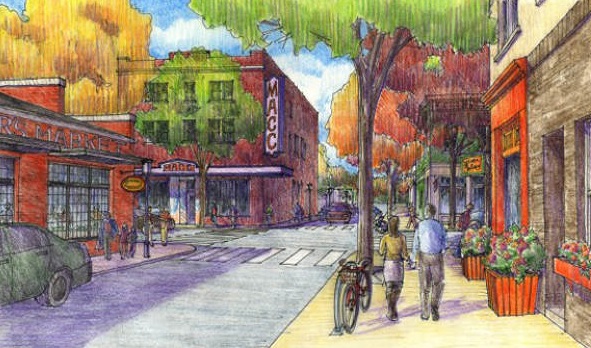
The code was approved by the city’s Planning Commission on March 7. Once the code wins approval from the committee it will go on to the full council for a vote. The city’s planning department is looking to meet with the four demonstration neighborhoods – Walnut Hills, Westwood, Madisonville, College Hill – in the coming months to move forward with changes in the zoning map to implement the form-based code.

Episode #16: Michael Moore from Cincinnati’s Dept. of Transportation

Waldvogel ViaductOn the 16th episode of The UrbanCincy Podcast, we’re joined by Michael Moore, Director of Cincinnati’s Department of Transportation and Engineering.

The department is responsible for the city’s existing transportation infrastructure — everything from filling potholes to operating Luken Airport — as well as overseeing new projects across the city. On the podcast, we discuss how the department is trying to provide Cincinnatians with more choices by introducing bike lanes, adding sidewalks, building the streetcar, and other efforts. Michael also provides information on several road and bridge projects, such as the Waldvogel and Western Hills viaducts, the Brent Spence Bridge, and the Kennedy Connector.

We also discuss how pre-existing “standards” and a one-size-fits-all approach may not be a fit for Cincinnati when it comes to complete streets and bike lanes. Finally, we discuss how traffic engineers balance moving automobile traffic efficiently with building walkable, livable streets.

Ways to Listen:

Episode #12: Cincinnati’s Form-Based Code

On the twelfth episode of The UrbanCincy Podcast, Cincinnati’s Vice Mayor Roxanne Qualls joins the UrbanCincy team to discuss the city’s adoption of a form-based code.

We discuss the advantages of a form-based code over a traditional zoning code, and Vice Mayor Qualls explains the process four Cincinnati neighborhoods (College Hill, Madisonville, Walnut Hills, Westwood) have used to put the code in place. John Yung shares his experiences with implementing a form-based code, and Randy Simes shares his concerns about needing to plan at a regional level.

We also discuss the now-adopted Plan Cincinnati, the city’s first comprehensive plan in 33 years. We discuss what makes Cincinnati’s comprehensive plan unique and how the plan will influence investments made by the city and  organizations like the Southwest Ohio Regional Transit Authority (SORTA).

Finally, we discuss how projects like the two-waying of Taft and McMillan Streets in Walnut Hills and a Liberty Street “road diet” could add to the livability of Cincinnati’s urban neighborhoods.

Ways to Listen:

Residents take a stand against proposed highway through Cincinnati’s eastern neighborhoods

In December 2010, the Ohio Department of Transportation (ODOT) published its 2011-2015 Major New Construction Project List. The list included funding to resume study of the highway component of the controversial Eastern Corridor Project. Dormant since 2006, the sudden reappearance of the highway project alarmed area residents, more than 100 of whom gathered at the Madisonville Recreation Center on August 3 for a meeting of Cincinnati City Council’s Livable Communities Committee.

On display were ODOT’s two circa 2006 Tier 1 alternatives, one of which called for the complete replacement of Red Bank Road with a fully grade separated interstate-style highway. This drawing, seen for the first time by most in attendance, emboldened suspicions that the Eastern Corridor Project is in fact a veiled attempt to extend Interstate 74 across Hamilton County.

I

“We urge ODOT to unbundle the Eastern Corridor projects and concentrate on providing transportation alternatives in this community, not another highway,” exclaimed one resident at the recent City Council committee meeting. “Reallocating resources to utilize the Wasson Line will produce more cost-effective transportation alternatives for thousands including Madisonville citizens.”

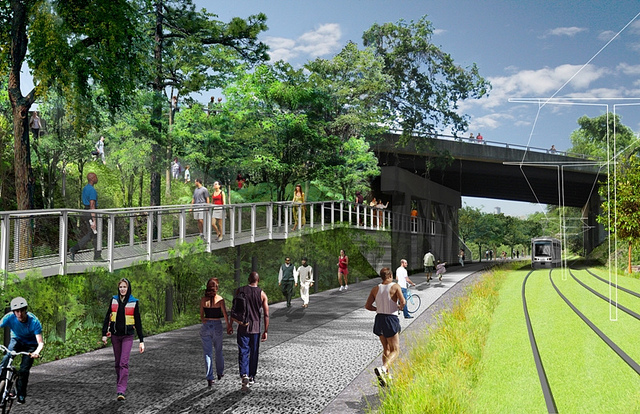
Citizen feedback generally welcomed improvements to Red Bank Road, especially a boulevard or parkway that might compare favorably to the more attractive roads in the area. Many also suggested development of better public transportation, especially implementation of light rail transit on the abandoned Wasson Road railroad.

Read UrbanCincy‘s exclusive in-depth analysis of the Wasson Line and Oasis Line.

Opposition to construction of an expressway in place of Red Bank Road was unanimous at the meeting, and citizen comments were followed by stern questioning of ODOT officials by City Council members Roxanne Qualls, Laure Quinlivan and Chris Bortz.

ODOT assured the committee that the Tier 1 alternatives on display would be reworked and that it will work closely with Madisonville Community Council and other neighborhood groups to ensure a favorable outcome. ODOT officials also remarked that the City of Cincinnati and other jurisdictions through which the Eastern Corridor Project will pass will have to approve ordinances to allow its eventual construction.