Randy is an award-winning urban planner who founded UrbanCincy in May 2007. He grew up on Cincinnati’s west side in Covedale, and graduated from the University of Cincinnati’s nationally acclaimed School of Planning in June 2009. In addition to maintaining ownership and serving as the managing editor for UrbanCincy, Randy has worked professionally as a planning consultant throughout the United States, Korea and the Middle East. After brief stints in Atlanta and Chicago, he currently lives in the Daechi neighborhood of Seoul’s Gangnam district.
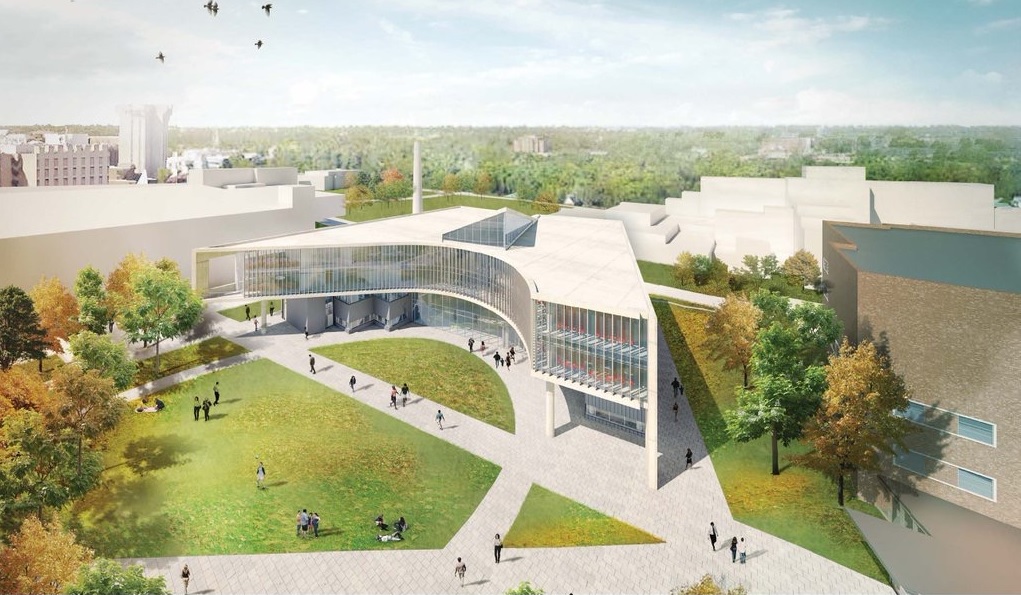
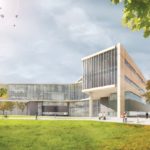
Located along Panzeca Way, immediately north of the massive Eden Avenue Parking Garage, the contemporary four-story building will house classrooms, labs and office space for the College of Allied Health Sciences. According to project manager Dale Magoteaux, classrooms will be located throughout the building, while lab and office space will be located in the building’s south and north wings, respectively.
The dean of CAHS, Tina Whalen, says that department heads closely coordinated with building designers to ensure that the needs of students, researchers and faculty were met, while also ushering in a new landmark building for the university’s east campus.
SE Aerial View of Health Sciences Building [Provided]
SE View of Health Sciences Building [Provided]
NE View of Health Sciences Building [Provided]
“We are thrilled that Perkins+Will has created a signature building for the college that will highlight our many educational, research and clinical service initiatives,” Whalen said.
The standout design for the $98 million Health Sciences Building will be further accentuated by the fact that it will be fronted by a nearly 1.5-acre green space that will create a natural entryway to the Kettering Lab Complex.
University Architect Beth McGrew says that the green space is part of the university’s larger commitment to creating a healthy and equitable campus environment.
“This is why green space is being created, as well as abundant natural light in the new structures, to provide a more enjoyable work place,” McGrew explained. “Along with this will be new classrooms to make space among the colleges more equitable with more opportunities for sharing.”
The schedule calls for the project to be completed in the fall of 2018, which is the same year the College of Allied Health Sciences will celebrate its 20th anniversary.
The project is part of a much larger program that is upgrading the surrounding collection of buildings through renovation or demolition and rebuild. That program of work is expected to be completed within the next three years.
In total, the tax credits are worth $22.8 million and are expected to spur $225.6 million in private investment.
“A community’s historic buildings make it unique,” said David Goodman, director of the ODSA. “Giving a building new life honors the history of the building, while creating construction jobs in the short-term and opportunity for economic activity in the future.”
Matt Peters Announces Ohio Historic Preservation Tax Credit Winners [Provided]
In recent years southwest Ohio had fared extremely well in the competitive bid process for the funds, and this round proved to be much of the same. This group of winning applicants includes five from Cincinnati, one from Hamilton, and two from the Dayton area.
One of the Dayton projects was the winner of one of the state’s two prestigious $5 million awards. That money will go toward the $46 million United Brethren Building project in downtown Dayton, which will transform the long-vacant, 112-year-old building into 164 apartments.
While the Cincinnati-region had the most number of awarded projects, most of the tax credits were small in size. Four projects, three located in Over-the-Rhine and one in Hamilton, received amounts ranging from $150,000 to $250,000. While small in scope, the projects will save numerous historic structures from demolition, while also creating dozens of residential units and commercial space.
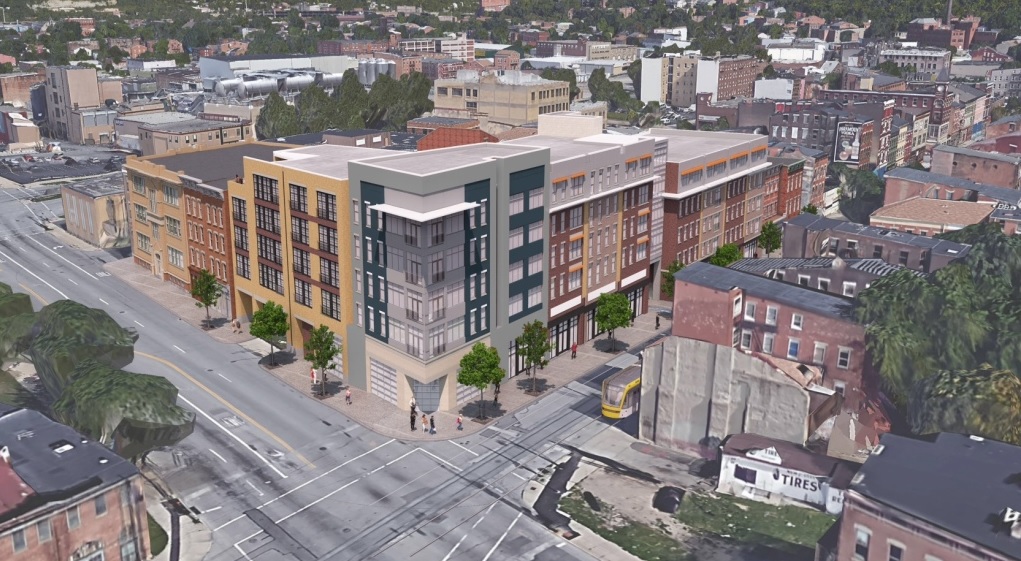
Rendering of $25M Freeport Row Development [Provided]
The long-debated Freeport Row project, located at Liberty and Elm Streets, received a sizable $1,358,772 tax credit to help restore five historic structures as part of the overall $25 million development. Once complete, the project is expected to yield 110 apartments, 17,000 square feet of retail, and a total of 100,000 square feet of new construction on the vacant lots surrounding the historic structures.
Just blocks north of Freeport Row, along the Cincinnati Bell Connector, is another project that took home the largest tax credit in Cincinnati. Market Square III was awarded with $1,690,000 in tax credits and push forward the latest phase of Model Group’s massive redevelopment efforts surrounding Findlay Market.
Market Square III will renovate eight historic structures, most of which are currently vacant, to include street-level commercial space with 38 apartments in the upper floors.
One of Cincinnati’s most popular neighborhoods will soon get its very own transit hub.
With more than 13,000 people boarding or exiting buses every day, Northside has long been one of the region’s busiest transit hubs. This is partially due to the neighborhood’s high population and business density, but also because of the numerous transfers from the eight bus routes there (15x, 16, 17, 19, 20, 23x, 27, 51).
This high transit ridership also creates an odd conversion of buses from all over the city. In an effort to clean up the operation of these bus routes, the Southwest Ohio Regional Transit Authority has long been trying to streamline and enhance operations at Knowlton’s Corner.
After years of work, that vision is finally becoming reality with the $320,000 Northside Transit Center.
“Northside has been working to improve bus traffic through the neighborhood for most of two decades, and the pieces are finally falling into place,” said Ollie Kroner, President of the Northside Community Council.
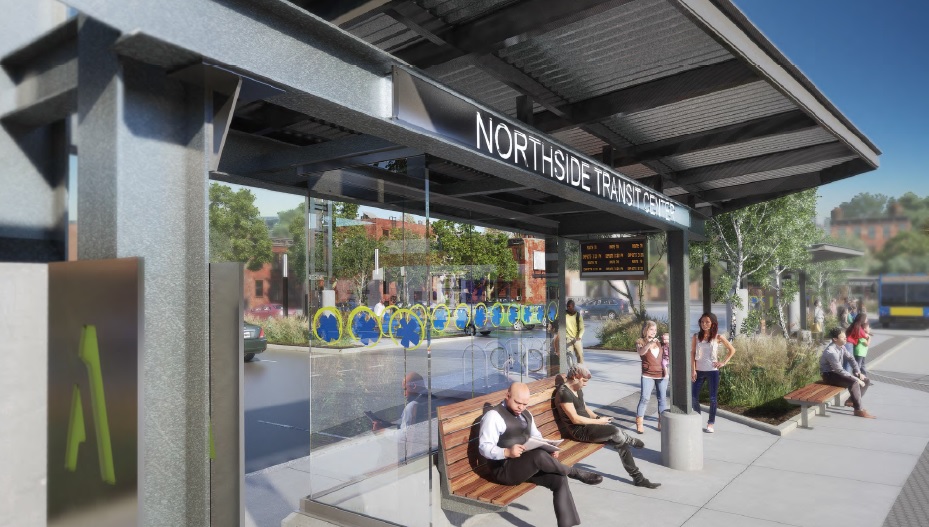
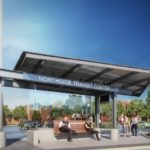
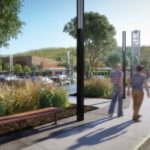
Shelter Design
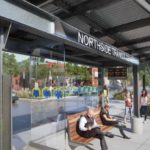
Shelter Design
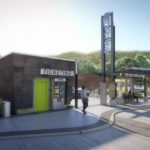
Ticketing Kiosk
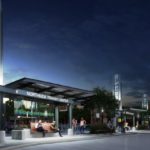
Bus Bays at Night
Art Incorporation
Landscaping
Landscaping
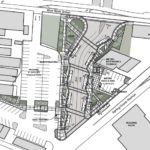
Site Plan
“Metro presented preliminary plans to the community in July. I would say we are a hard group to impress, but their drawings really exceeded expectations,” Kroner continued. “This should be good for commuters, and also good for our business district.”
Its location is further complimented by the nearly location of a large Cincy Red Bike Station at Hoffner Park.
Cincinnati-based MSA Architects has completed its designs for the new transit hub in the heart of the Northside business district immediately south of the recently completed $15 million Gantry Apartments development. The new facility will boast dedicated bus lanes, boarding platforms, passenger shelters, bike racks and lockers, and real-time arrival technology.
The plan also calls for a significant upgrade and expansion of an adjacent parking lot, which SORTA officials envision as also serving as a miniature park-and-ride facility with 18 allocated spaces.
Project officials say that the Northside Transit Center project is expected to be completed by late 2017.
Larger Implications
Northside has become the center point for the city as hit-and-runs with people walking and biking have increased. In September, this even led to the community organizing public demonstrations urging City Hall to reduce the speed limit through the business district, while also committing to other safety improvements city-wide.
The implementation of the Northside Transit Center will significantly help consolidate bus traffic through the popular business district, while also create a safe and hospitable place for people to wait for their transit connections.
“We have the second busiest transit hub in the city after Government Square, in a neighborhood that was built before we had cars,” Kroner told UrbanCincy. “The transit hub should make riding the bus easier, more comfortable, and safer in Northside.”
While the City of Cincinnati has not committed to a Vision Zero campaign, or an official Complete Streets policy, residents continue to call for such measures.
Meanwhile, the move also comes as Metro attempts to reinvent its region-wide bus system in order to better connect people with jobs. Historically, many bus systems relied on what is called a spoke-and-hub system that ran all routes to a central downtown transit center. This train of thought has changed as cities have become increasingly more mixed-use and diverse.
Metro officials plan to unveil a new regional transit plan in early 2017, and may possibly put a transit tax increase before votes next November to help implement the recommendations laid out in that plan.
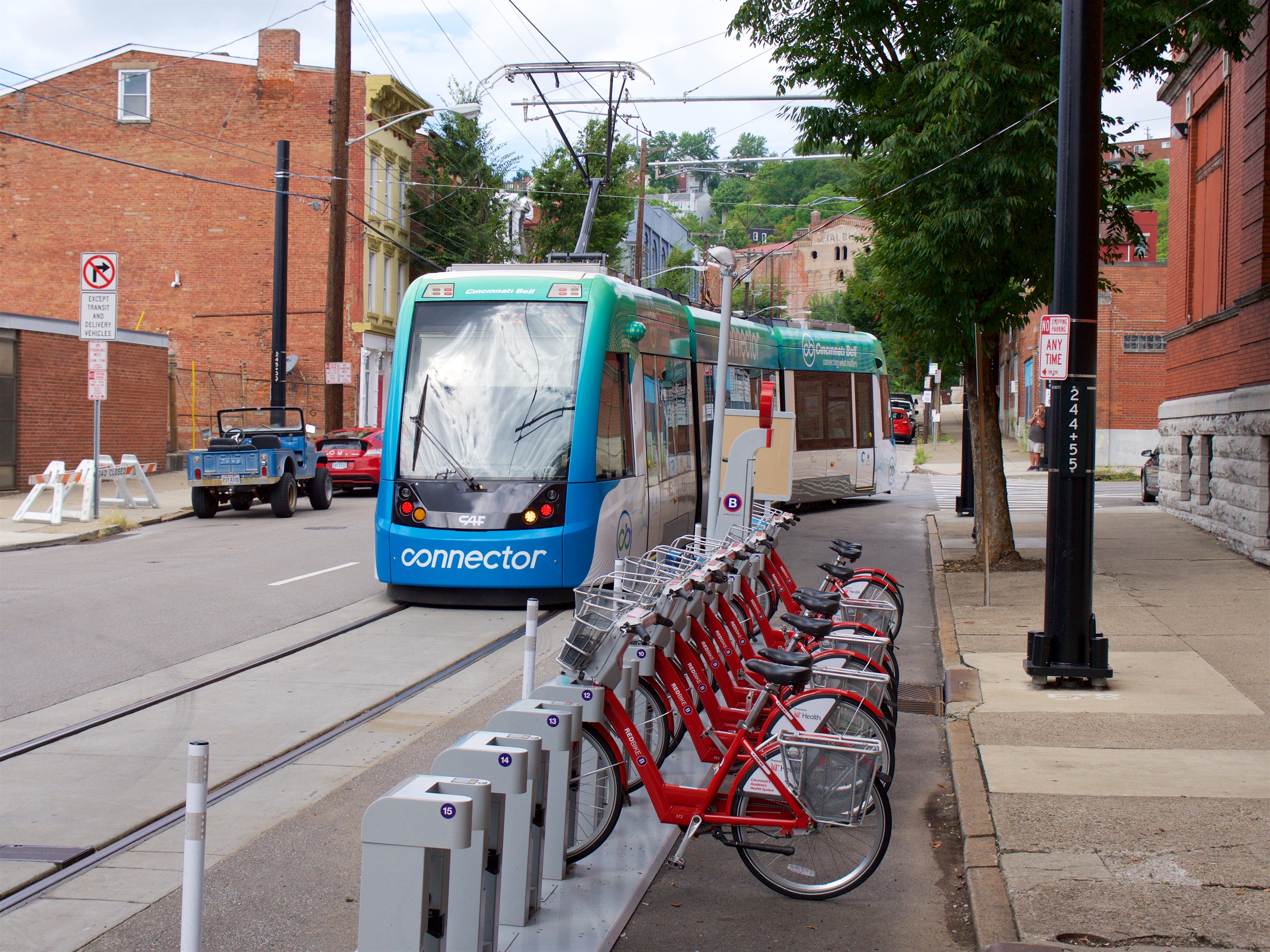
A new Red Bike station has been added right next to the Brewery District streetcar stop.
The Bengals will host their first home game of season this Sunday at Paul Brown Stadium. A capacity crowd is expected to fill the stands, and city leaders are looking to provide a variety of options for fans to easily get to and from the game safely.
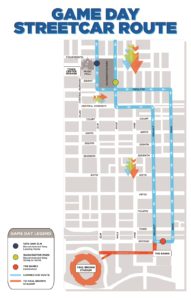
One of those options includes the newly opened Cincinnati Bell Connector. Operating from the northern reaches of Over-the-Rhine to The Banks – just two blocks from Paul Brown Stadium – the streetcar vastly expands the reach of those walking to the game from their home or from their car.
As such, City Hall is offering a first-of-its-kind parking special at the Town Center Garage on Central Parkway. Located within two blocks of two different streetcar stations, parking at Town Center Garage will be offered for just $10 on game days; and the first 100 cars will receive four free streetcar passes.
“The Town Center Garage is a natural extension of game day parking options, and its proximity to two streetcar stops makes it a natural fit for fans looking to save money and avoid game day traffic,” said Oscar Bedolla, Director of Cincinnati’s Department of Community and Economic Development.
City officials are encouraging fans to come early on game day to enjoy all the offerings along the Cincinnati Bell Connector route, including the tailgate party at The Banks, watch party on Fountain Square and numerous bars, restaurants and shops throughout Over-the-Rhine.
“What we are looking to do here is take full advantage of the link that the Cincinnati Bell Connector offers from Over-the-Rhine to Downtown, to the benefit of football fans,” Parking Division Manager Daniel Fortinberry said in a prepared statement. “We see this as a fun way for fans to get to and from the game.”
The first weekend the streetcar was open saw more than 50,000 riders take advantage of free service. The second weekend, which coincided with Oktoberfest Zinzinnati, saw more than 29,000 riders pay to ride the Cincinnati Bell Connector. With large crowds expected at the Bengals game and MidPoint Music Festival, another large number of riders is anticipated for this weekend.
In addition to the parking special and streetcar service, Metro has again partnered with Miller Lite to offer free rides on Metro bus service from 7am to midnight this Sunday.
While the special partnership is an effort to cut back on drunk driving, it also offers Cincinnatians a good chance to check out Metro bus service for free – not just going to the game, but anywhere on Metro’s regional system.
“As a transit system, the safety of our customers is always our top priority,” said Dwight Ferrell, Cincinnati Metro CEO & General Manager. “Thanks to Miller Lite, Bengals fans will now be able to enjoy the game even more by letting Metro be their designated driver with free rides to and from the stadium.”
The Bengals (1-1) will take on the defending Super Bowl champion Broncos (2-0) this Sunday at 1pm along the central riverfront at Paul Brown Stadium.
The groundbreaking for the $11.1 million Marlowe Court development in College Hill shined new light on west side neighborhood, but the influx of new investment in the neighborhood’s walkable neighborhood business district has been growing for some time.
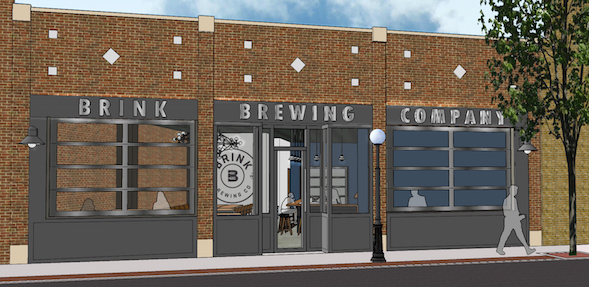
One of the next large investments will come in the form of a new brewery called Brink Brewing. While Brink is part of a larger craft beer movement that has been surging for years, it is part of a younger craft beer culture on the city’s west side; and the owners are hoping to tap into that otherwise untapped market.
“First and foremost we are aiming to serve beer lovers in and around the College Hill neighborhood,” John McGarry, marketing and design manager for Brink Brewing, told UrbanCincy. “Our sights are squarely focused on being a neighborhood-oriented tap room.”
Brink Brewing Company [Provided]
While the Brink Brewing ownership, which includes four young couples, does not have any previous ties to College Hill, McGarry says that they were drawn to the neighborhood after discovering the passion of its residents and business owners. The walkable character of the neighborhood business district also made it an ideal choice for the Brink Brewing team.
“College Hill wasn’t part of our initial search, but as soon as we discovered it we fell in love,” said McGarry. “The stretch of Hamilton Avenue where we’ll be located is a walkable strip of small businesses with a proud past and a bright future. We met some of the other business owners there like Marty at Marty’s Hops & Vines and Megan at Fern and knew right away we should be paying attention.”
When asked about whether or not the local beer market is becoming over-saturated, he said that Brink Brewing is going after a different segment than what many other brewers are aiming for. Rather than trying to grow production and fight for tap and shelf space throughout the region, they are planning to settle into the neighborhood and serve it with high quality beer.
“From my perspective, I think brewery/taprooms are still a fairly new concept in Cincinnati. Places like Denver, Portland, and San Diego have shown that small, neighborhood focused breweries can really thrive and be a great addition to the community,” McGarry explained. “I think of brewery tap rooms much like local coffee shops, and you never hear anyone say that there are too many of those.”
Construction work is underway on transforming the 3,200-square-foot space, which will be complimented by a large outdoor patio space behind the building. After accounting for the space that will be needed for production, there should be enough room left over to accommodate 100 guests at any given time.
The amount of construction work taking place inside the 90-year-old structure is extensive. In addition to the resurfacing the front of the building through a façade improvement grant from the College Hill Community Urban Redevelopment Corporation, the interior has been completely rehabbed.
As part of the façade improvements, Brink Brewing will add a large commercial garage doors onto the front and back of the building to allow for the wall to open up on nice weather days – hopefully inviting more people from the neighborhood inside.
When it comes to the beer, McGarry says that the brewery will produce a range including pale ale, IPA, brown and stout beers. They will also serve some higher gravity and experimental beers, but will maintain a focus on core products.
“We will incorporate infusions and experimentations into some of our offerings, but we also recognize that the pendulum has swung a little too far into the exotic recently,” explained Kelly Montgomery, head brewer at Brink Brewing. “By frequently rotating our menu we feel there will always be something new to try along with the staples that have elevated craft beer.”
Since each of the young couples has young children, they say that they also hope the establishment will be family friendly. In order to help create this atmosphere, Brink Brewing will have a community table area and will even offer juice boxes, free wi-fi and board games.
The ownership group has signed a five-year lease on the space, which can be extended an additional 10 years. If all goes well, the team hopes that they can stay in the space for the long-haul.
“We want to be a part of revival of the Cincinnati beer tradition and become a part of the fabric of the neighborhood,” McGarry concluded. “We think our model of a modest-sized brewery and comfortable tap room to hang out in will allow us to do just that.”
Brink Brewing should open to the public sometime in November, and employ some 15 to 20 people within the next year or so.




 The
The