Cleveland considers adding more skywalks!

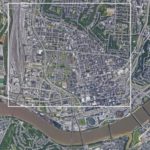
Over the past decade Cincinnati has actively been working to dismantle the once extensive elevated skywalk system in its downtown. Other cities throughout the country such as Baltimore have followed Cincinnati’s lead however a recent report coming out of Cleveland spotlights the recent debate over two projects that would add more skywalks in their downtown. Read more at the Atlantic Cities:

For the most part, it didn’t work, and now cities such as Baltimore and Cincinnati are tearing down the skywalks they once built with such fanfare, in an effort to return pedestrian life and vitality to the street. Meanwhile, in Cleveland, the owners of the year-old Horseshoe Casino downtown are planning to build a brand-new skywalk, and the county government is looking to refurbish another one just a few blocks away. For many of the young people moving to Cleveland in search of a 21st-century urban experience – pedestrian-friendly, with lots of people out and about – it seems like a step backward in time.

3CDC to Break Ground on Second Phase of Mercer Commons May 31

It’s hard to ignore the ongoing transformation of Over-the-Rhine these days. It seems almost every day a new restaurant, business or development project is announced to open in the once struggling neighborhood. Of course, the key player leading the neighborhoods redevelopment efforts is the Cincinnati Center City Development Corporation, better known as 3CDC.

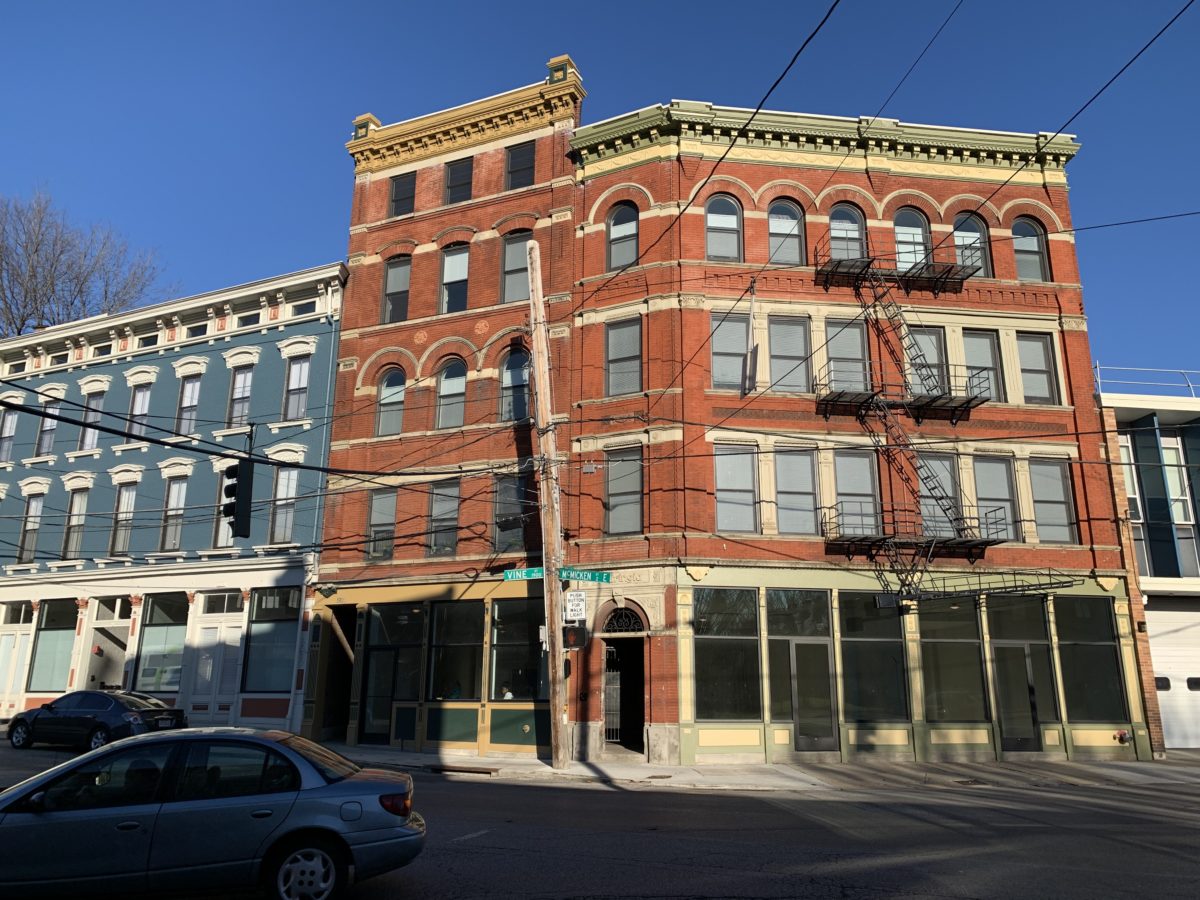
3cDC’s latest phase includes tackling one of its largest redevelopment projects in the neighborhood, Mercer Commons, which includes almost two blocks worth of buildings between Vine Street and Walnut Street.

The $60 million project is divided into three phases. Phase one, which is currently underway, includes the construction of a new four-story condo building along Vine Street, five town houses, the redevelopment of  a couple historic buildings and a 340-space parking garage that opened to the public last week.

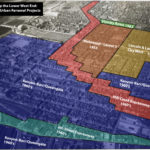
Mercer Commons Phasing

According to 3CDC spokesperson Anastasia Mileham, preparations for phase two are already underway and construction is officially slated to kick off at the end of the month.

“The groundbreaking event for Mercer Phase 2 is scheduled for 1pm on May 31, but we haven’t closed on Phase 2 yet ,” Mileham explained, “We are starting construction already to try to keep up with demand and stay on schedule.”

The second phase of the project will include rehabilitation of 15 historic buildings into mixed income apartments. The development team says that 30 out of the 67 apartments will for people who make 50-60% of the average median income.

To help provide the affordable housing units, 3CDC relied on a $4.6 million Low Income Housing Tax Credit from the federal government, and marks the non-profits first foray into mixed income housing.

Mileham told UrbanCincy that receiving the tax credit was the most rewarding aspect of the project to date, ” There is a need for this type of mixed income development.”

Since the newly opened Mercer Commons Garage is large enough to serve the entire development, and then some, the developers were able to preserve space in the development plan behind newly built structures in phases two and three. This space, 3CDC says, will be preserved for interior courtyards similar to the one found at Parvis Lofts across the street.

Once fully built out, Mercer Commons will add 156 residential units, in both apartments and condos, and 17,600 square feet of street-level commercial space.

While no tenants have been signed, Mileham says that there has been “substantial” interest in the 3,900 square feet of retail space in phase one.

Chicago aiming to cap Kennedy Expressway trench with 10-15 acre park

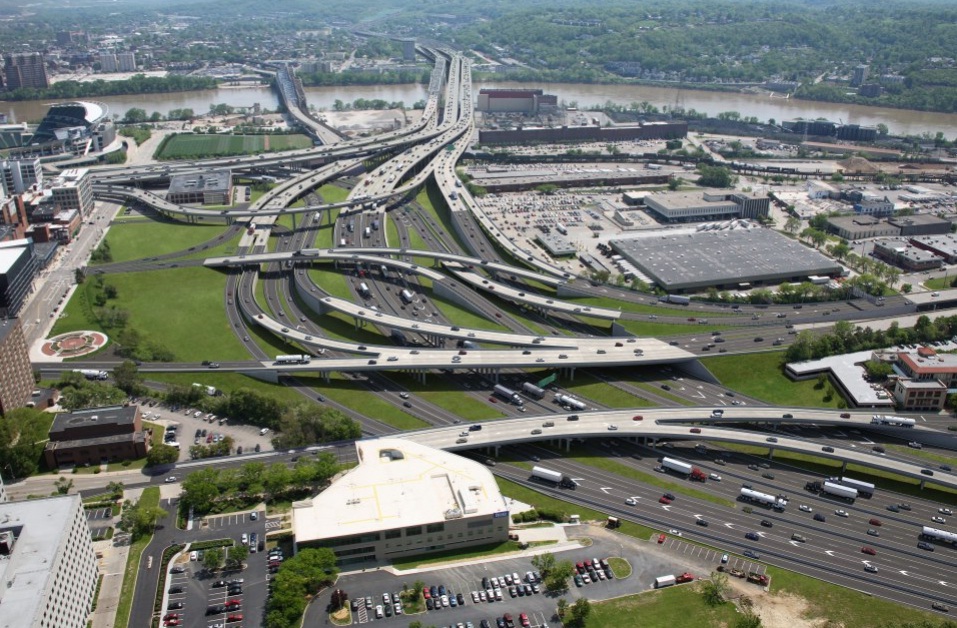
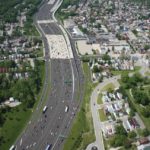
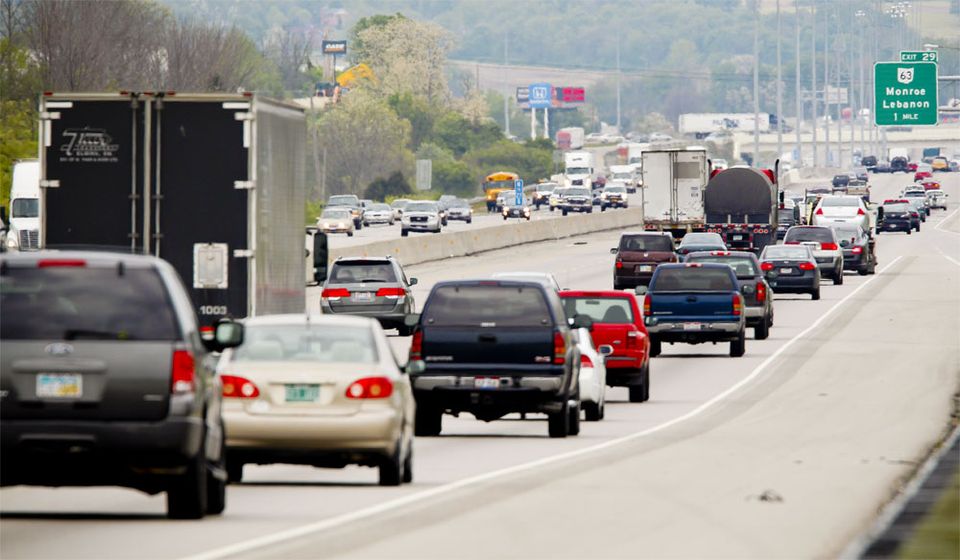
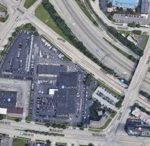
Part of Cincinnati’s Central Riverfront Master Plan is the eventual capping of Fort Washington Way. In Chicago, architects are working to develop a similar cap system that will bridge over the highway connecting the West Loop neighborhood to downtown. More from the Architect’s Newspaper:

In cooperation with developer Fifield Companies, Sarver and his firm have fleshed out a masterplan that calls for 10 million square feet of new office space in the West Loop in 10 years. The plan also calls for a 10-to-15-acre park covering the trench of the Kennedy Expressway, which forms a barrier between the West Loop and downtown. Alan Schachtman, executive vice president of Fifield, called this hypothetical green a Millennium Park for the West Loop.

Cincinnati Expands, Streamlines Mobile Food Vending Zone Program

Last month Cincinnati City Council approved changes to the city’s Mobile Food Vending Program, which oversees food truck operators choosing to take advantage of mobile food vending zones throughout the city.

According to city officials, two new mobile food vending zones will be added in Over-the-Rhine. The changes were approved 8-1 by city council, with Councilmember Christopher Smitherman (I) casting the lone opposition vote.

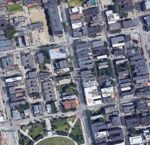
The first is at Washington Park and will accommodate up to three food trucks at any given time. This location, officials say, will be open to mobile food vendors from 6am to 3pm, and will be open during evening hours based on agreements between the Cincinnati Center City Development Corporation (3CDC) and those vendors who are in the program.

Cincinnati Food Truck at Court Street

The second Over-the-Rhine location will be at Twelfth and Clay Streets, and is the result of much negotiation with nearby restaurants that had been wary of a mobile food vending zone near their establishments. This location will accommodate up to two food trucks at a time, and unlike the Washington Park zone, will allow vendors to operate between 6pm and 3:30am.

The new Over-the-Rhine mobile food vending zones add to the other six locations in place throughout the city. According to Councilmember Laure Quinlivan (D), who first proposed legislation to create the mobile food vending program in 2010, those who would like to see mobile food vending zones established elsewhere throughout the city can contact her office at laure.quinlivan@cincinnati-oh.gov.

City officials say that all of the following official mobile food vending zones are open seven days a week, and are available to operators with mobile food vending licenses on a first come, first serve basis.

  • 12th/Clay Streets (6pm to 3:30am)
  • Court Street Market (6am -3pm)
  • Fountain Square/North Vine Street (6pm-3:30am)
  • Fountain Square/North Fifth Street (6am to 3:30am)
  • Fountain Square/South Fifth Street (6am to 3:30am)
  • Purple People Bridge (6am to 3:30am)
  • University Hospital (6am to 3:30am)
  • Washington Park zone (6am to 3pm)

“If you have additional mobile food vending zones you’d like to see created, please contact me to learn how to get it done,” Quinlivan stated. “The bottom line is that you need to get support for the new zone from nearby property owners.”

Cincinnati Food Truck Zones

Food truck operators interested in getting a mobile food vending license will not see their annual fees change from the current $600 for a six-month license or $1,000 for a full year. But, according to city officials, they will now apply through the Cincinnati Health Department in an effort to streamline the application and licensing process since the health department also must issue a health license for the food trucks.

Other approved changes include the elimination of the non-refundable $25 application fee, and structural changes for the mobile food vendor zone at the foot of the Purple People Bridge to allow for more consistent space availability for food truck operators.

Due to the court-issued restraining order on the City of Cincinnati, the changes could not take effect immediately, and will finally go into effect this Friday, May 17 following the required 30-day waiting period.

To celebrate, the Cincinnati Food Truck Association, Quinlivan and community leaders will gather at Washington Park this Friday at 11:30am to celebrate the new food truck zones.

“I’m excited our program has created jobs and livened up city streets,” Quinlivan stated. “I’m told we now have 28 mobile food trucks in Cincinnati and we hope all of them participate in our program.”

Cincinnati’s Recommended Budget Calls for 201 Layoffs, Program Eliminations

Cincinnati City Manager Milton Dohoney released his recommended budget that makes a large number of cuts to fill the $35 million budget gap left behind following the State of Ohio’s reduction of $26 million in funding to the City of Cincinnati.

The original budget proposal from Dohoney included $25.8 million from an upfront payment included in the parking lease and modernization plan, which would have also included $3 million in annual payments thereafter. This proposal was approved 5-4 by City Council, but was put on hold by a local court until opponents were able to file petitions and get the proposal put on this November’s ballot for public vote.

“Though a legal victory is being vigorously pursued, the ultimate resolution is not assured in time to affect what must be in place by June 1 to take effect July 1, 2013,” Dohoney explained. “Should a final legal victory be realized after July 1, the Administration would presume to move expeditiously to reverse some of the impacts of the cuts contained within the recommended budget.”

Cincinnati Mounted Patrol
Cincinnati’s mounted patrol would be cut entirely if City Council passes the recommended budget. Photograph by Randy Simes for UrbanCincy.

The end result of these cuts includes the elimination of 66 police officers, 71 fire fighters, 64 city employees, and the elimination of 60 vacant positions. The recommended budget will also eliminate funding for the following items:

  • Greater Cincinnati Energy Alliance ($150,000)
  • Urban Agricultural Program ($65,000)
  • Heritage Events Subsidy – Opening Day Parade, St. Patrick’s Day Parade, Black Family Reunion, Juneteenth ($36,000)
  • Camp Washington, Fairview, Filson, Spring Grove Village, and Ziegler Pools ($167,650)
  • Bush Recreation Center in Walnut Hills ($127,710)
  • Energy Management Program ($100,010)
  • Mounted Patrol ($95,000)
  • Community Prosecution Program ($83,857)
  • Delinquent Accounts/Receivables Program ($75,460)
  • Claims Program ($55,680)
  • Tire Collection Program ($30,880)

In addition to the elimination of these programs, no funding is budgeted for either 2014 or 2015 as a result of limited General Fund resources.

Furloughs for City Management staff will also take place, and the City of Cincinnati would also use a larger amount of projected casino revenues to balance this budget, even though Dohoney has recommended against that in the past due to the unpredictability of these funds.

“While balancing a budget deficit with mostly cuts is not preferred, the timing of the new fiscal year coupled with the timing of the litigation over the parking deal makes it the only real option with a number this large,” Dohoney stated in a prepared release. “Our goal is going to be to recall staff as soon as possible and provide the best customer service we can deliver for the citizens in the meantime.”

A number of other measures are taken in the recommended budget to help close the budget gap, but the large amount of savings is realized through personnel layoffs. Dohoney has also recommended that the property tax millage increase from 5.7 mills to its maximum allowed 6.1 mills to raise an additional $1.3 million annually.

To help engage the public in this budget process, Cincinnati Vice Mayor Roxanne Qualls (C) has scheduled three public hearings. The first will take place at the Duke Energy Convention Center on Thursday, May 16 at 6:30pm, the second will occur on Monday, May 20 at 6:30pm at the College Hill Recreation Center, and the final meeting will take place at the Madisonville Recreation Center on Wednesday, May 22 at 6:30pm.

“My priority for the FY 2014 city operating budget is to make sure that all Cincinnati’s neighborhoods are safe and that we continue to attack blight that breeds crime,” Qualls stated. “As chair of the Budget and Finance Committee I will work to further reduce the number of layoffs for police, fire and health department personnel, to ensure that we keep all our neighborhoods safe and clean.”

Cincinnati Recognized for Recent Planning Successes, Historical Achievements at APA

Last month the American Planning Association (APA) held its annual conference for planning professionals. The 2013 conference was held in Chicago and organizers made efforts to showcase planning efforts of The Second City.

The educational sessions at the conference are made up of presentations by planning officials across the country. A few of the sessions were hosted by Cincinnati Planning officials who highlighted some of Cincinnati’s recent planning successes.

Of the three sessions that featured Cincinnati city planners, one actually focused on the recently adopted PLAN Cincinnati comprehensive plan.

The Banks
Cincinnati and Hamilton County received a national award from the APA for the implementation of the Central Riverfront Master Plan and The Banks. Photograph by Randy Simes for UrbanCincy.

The plan was approved by the city in October 2012 and is the first long-term comprehensive planning vision of the city since 1980. The seminar also highlighted Cincinnati’s rich planning heritage as the city carries the noteworthy distinction of drafting the first ever city-wide comprehensive plan in the 1925 Master Plan. That plan, along with the 1907 Kessler Parks Plan, envisioned a walkable cityscape with an extensive parks system.

However, after World War II, the city drafted the 1948 Comprehensive Plan which proposed several highways and urban renewal projects. The 1948 plan was successfully implemented but instead of the promised revitalization of the city, the highway system and slum clearance policies supported by the plan drove the city’s population to the suburbs.

“The highway was unfortunately a successful implementation,” explained Gregory Dale from McBride Dale Clarion Associates, “Sixty years later we’re still trying to repair the damage.”

Presenters also highlighted how the Cincinnati’s Planning Department overcame the problems of being dissolved in 2002 and reconstituted in 2007.

“In some ways I think maybe if we had not been eliminated as a departments, maybe there would not be that strength today, maybe it wouldn’t have woken people up to see the importance of planning,” recalled Cincinnati Senior Planner Katherine Keough-Jurs.

She went on to say that she noticed the involvement and passion of participants in the new comprehensive plan was a positive sign that citizens were concerned about the future direction of the city. The citizen participation in the new plan highlighted residents desire for creating and reinvigorating walkable neighborhoods and commercial centers.

“The plan is unapologetically urban,”  Keough-Jurs told session attendees,”In many ways our new comprehensive plan returns to the vision of the 1925 plan.”

At the conference the City of Cincinnati and Hamilton County received an Excellence in Planning award from the APA for the implementation of the Central Riverfront Master Plan. That plan, which was first developed in the late 1990′s when the stadiums and Fort Washington Way were proposed for reconstruction envisioned a new mixed-use riverfront neighborhood called The Banks.

In 2011 the first phase of the mixed-use neighborhood opened to the public and the second phase is slated to begin construction this year.

The planning department’s most recent project, the adoption of the final draft of the form-based code is on City Council’s Livable Communities Committee Agenda today for their 1pm meeting.

The code was approved by the city’s Planning Commission on March 7. Once the code wins approval from the committee it will go on to the full council for a vote. The city’s planning department is looking to meet with the four demonstration neighborhoods – Walnut Hills, Westwood, Madisonville, College Hill – in the coming months to move forward with changes in the zoning map to implement the form-based code.

One Transit App to Rule Them All

As more people are turning to smartphones to help guide them around cities, app makers are looking into ways to create a transit app that not only provides mass transit directions but also information about the nearest car sharing service and taxi services. This kind of app would serve as a “one-stop shop” for urbanites looking to ditch the expense of owning an automobile and rely entirely on transportation alternatives. More from the Atlantic Cities:

What all of these apps, including taxis, are essentially trying to convince users that they can get to and from work, run errands, meet people for lunch, get to appointments, and do all their other daily tasks without having their own car. RideScout is betting that aggregating all these new transportation options in one place is the best way to make that case to users — which is a win for all transportation disrupters. “If people aren’t pumping $50 into a tank when they fill up, they can transfer that money to taxis, public transportation, and these other options,” Kopser says. “When people make the decision to leave their car at home, we all win — the roads are less clogged, there is less smog, and money is staying in the local economy.”