Start Off National Bike Month With 2013 Bikes+Brews Ride

UrbanCincy is proud to bring back the popular Bikes+Brews ride to help kick off National Bike Month in Cincinnati on Saturday, May 4.

In addition to Bikes+Brews, Cincinnati’s celebration of Bike Month will include dozens of events over the course of the month. Some will focus on teaching people how to maintain and care for their bikes, others will introduce people to biking, and others will look to celebrate the form of transportation through fun activities and events that enhance the experience of existing bicyclists.

As is tradition with the Bikes+Brews ride, the ride will start at the OTR Biergarten and then continue on throughout the center city. This year’s ride will include five stops along a nine-mile route traversing Over-the-Rhine, Downtown, Covington, Newport, and Bellevue before returning to Findlay Market.

The route is fairly level, and should be doable for cyclists of all ages and abilities.

After taking off from the OTR Biergarten at 12pm, riders will head south to the Moerlein Lager House and then across the Roebling Suspension Bridge to Keystone Bar & Grill in Covington. Following that, the group will head east to The Elusive Cow Cafe in Bellevue, then double-back and head north across the Ohio River via the Purple People Bridge.

Once back in Ohio we will stop at Rock Bottom Brewery on Fountain Square, then head north to Mayberry Gastropub before concluding the ride back at Findlay Market at Market Wines.

Those interested in joining the group mid-ride are welcome to do so, and will be able to track the group’s progress by following #bikebrews or @UrbanCincy on Twitter.

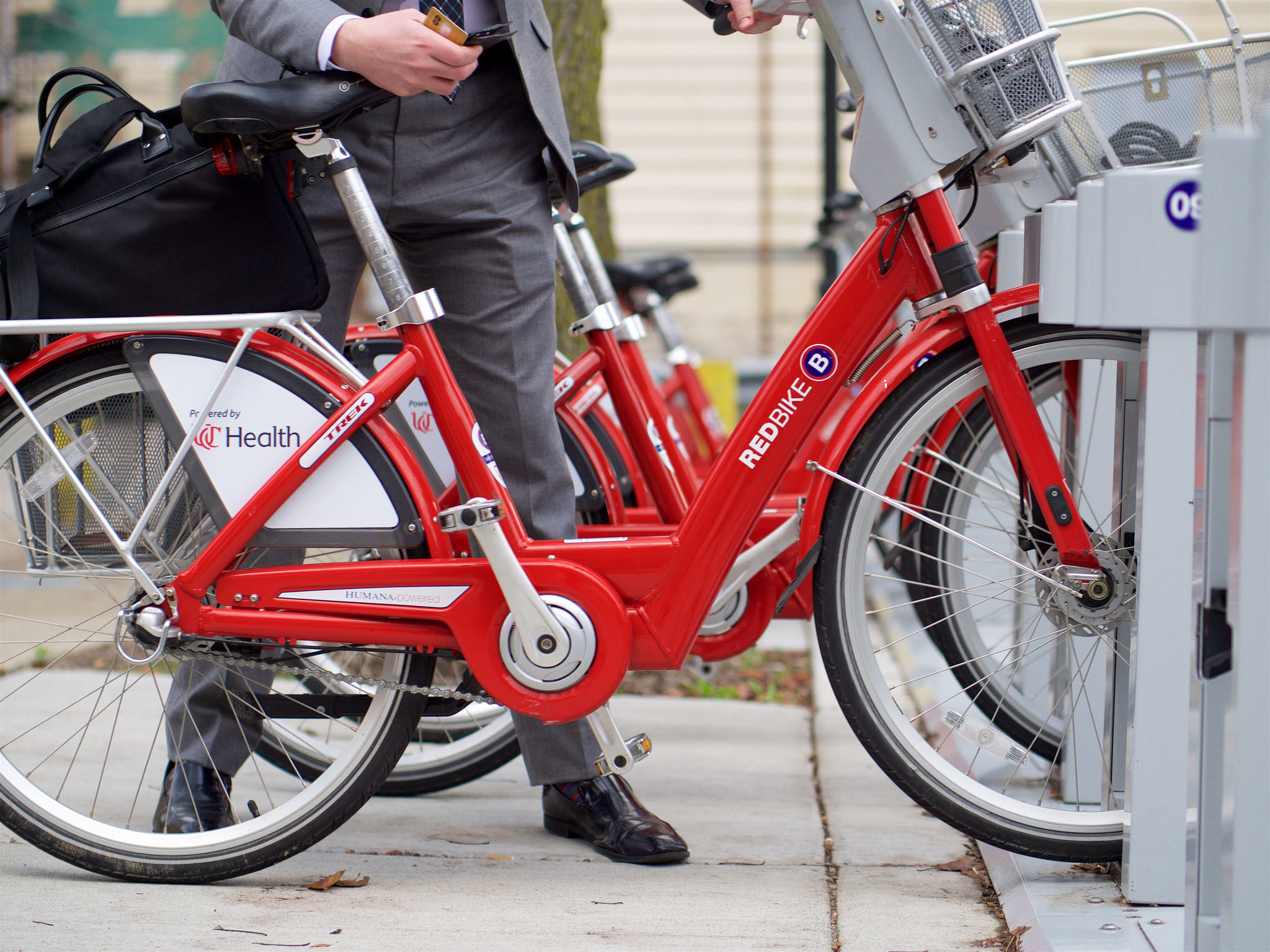
Those who do not have their own bike can rent one from the Cincinnati Bike Center (near our first stop on the ride) for the day for $25.

The 2013 Bikes+Brews ride is free and open to anyone who would like to participate, and will take off from the OTR Biergarten around 12pm. The ride is expected to conclude back at Market Wines around 5pm.

Inner-City Neighborhoods Center of Population, Economic Power in Cincinnati Region

The Cincinnati region has been one of the nation’s best economic performers over the past several years, and that has resulted in a 6.4% unemployment rate that is more than a point better the national average.

According to the U.S. Census, more than 968,000 jobs are scattered all over the region, but it is the City of Cincinnati that stands out as the dominant force for the 2.1 million person region.

As the numbers in the City of Cincinnati’s 2013/2014 Biennial Budget Report show, the financial standing of the central business district is critically important to the overall financial health of the entire city and county. According to the report, income taxes brought in $234 million last year – nearly 71% of the City’s total revenue in 2012.

Cincinnati Employment Density Cincinnati Employment/Population Share
While outlying suburban communities have seen an influx of jobs over the past 30 years, Downtown and Uptown remain the region’s preeminent job centers. Employment Density Map and Employment/Population Share Map by Nate Wessel for UrbanCincy.

In the Cincinnati Metropolitan Statistical Area (MSA), center city neighborhoods account for the highest concentration of jobs, with more than 22,000 jobs per square mile in Downtown’s 45202 zip code, and anywhere from 3,000 to 9,000 jobs per square mile in Uptown neighborhoods.

“Downtown and Uptown are the City’s largest employment centers and therefore they are very important to the City’s financial health,” said Lea Ericksen, Cincinnati’s Budget Director. “We want all our neighborhoods to improve tax earnings by increasing residents, jobs and overall economic vitality, but we are focused on the six GO Cincinnati strategy areas for redevelopment.”

Cincinnati’s 2.1% income tax largely goes to support the General Fund which pays for operating expenses like police officers and fire fighters. Smaller percentages also go to pay for public transit operated by the Southwest Ohio Regional Transit Authority (SORTA) and capital investments in City buildings and infrastructure.

Ericksen projects that while income taxes will remain the same, they will grow in value by approximately 2.6% annually over the next six years.

Income & Property Tax Earnings (2004-2016)
The City of Cincinnati has experienced steady growth in income tax revenues since 2004, but it has struggled to recover from the previous decade’s housing crash. Chart produced by UrbanCincy.

Property taxes are the next largest revenue generator for City Hall – accounting for $23.9 million in 2012. City officials expect this number remain stable over the next four years following an initial $7.8 million annual bump should the current property tax rollback be eliminated and set at 6.1 mils.

Like the clustering of jobs in the city’s urban core, the most heavily populated neighborhoods are also located within the center of the region.

“People are very interested in center cities, and we have an exceptionally attractive center city,” David Ginsburg, President/CEO of Downtown Cincinnati Inc. told UrbanCincy. “The architecture here and the geography that we have being in the valley. We just have a compact, spectacular downtown, and I think we have barely touched the surface of what the market can bear.”

Some of the most valuable residences are located along the central riverfront and eastside neighborhoods, with recent growth in northern communities in Butler and Warren Counties.

Cincinnati Population Density
Several neighborhoods boast densities of 7,000 or more people per square mile, and those neighborhoods are all centrally located. Population Density Map by Nate Wessel for UrbanCincy.

Uptown neighborhoods surrounding the University of Cincinnati and Xavier University, Downtown/Over-the-Rhine, and close-in neighborhoods on the westside and along the Northern Kentucky riverfront are the most densely populated in the region.

“We’ve seen quite a bit of where we rehab a home, the neighbor decides to rehab their home,” Ken Smith, Executive Director of Price Hill Will, said about the development corporation’s Buy-Improve-Sell program which has rehabilitated 52 thus far in 30,000-person neighborhood, on episode 14 of The UrbanCincy Podcast. “People are very impressed with the housing stock in the neighborhood, and they are often quite impressed.”

Not all is well, though, for city leaders as they attempt to recover from the housing crash that took place between 2006 and 2010. Neighborhoods like East and West Price Hill are aggressively working to improve their residential housing stock by getting rid of vacant units even by taking advantage of hundreds of demolitions planned throughout the city.

“We are working with the Hamilton County Land Bank to get these empty lots into hands of those next door, but there are going to be a few houses that I wish we could save, and in better times maybe we would have the money to save it, but in better times they may not have gotten to that point,” explained Price Hill Will’s Matt Strauss, Director of Marketing & Neighborhood Promotion at Price Hill Will. “The goal is not only to bolster owner occupancy, but to increase property values in the neighborhood.”

Listen to episode 14 of The UrbanCincy Podcast with the leaders at Price Hill Will to hear more about the work being done on the westside to recover from the housing crash, and episode 15 with David Ginsburg to get the latest insight on the region’s economic engine. You can stream our podcasts online or subscribe to our bi-weekly podcast on iTunes for free.

Tolled highways may soon become part of everyday life in Cincinnati

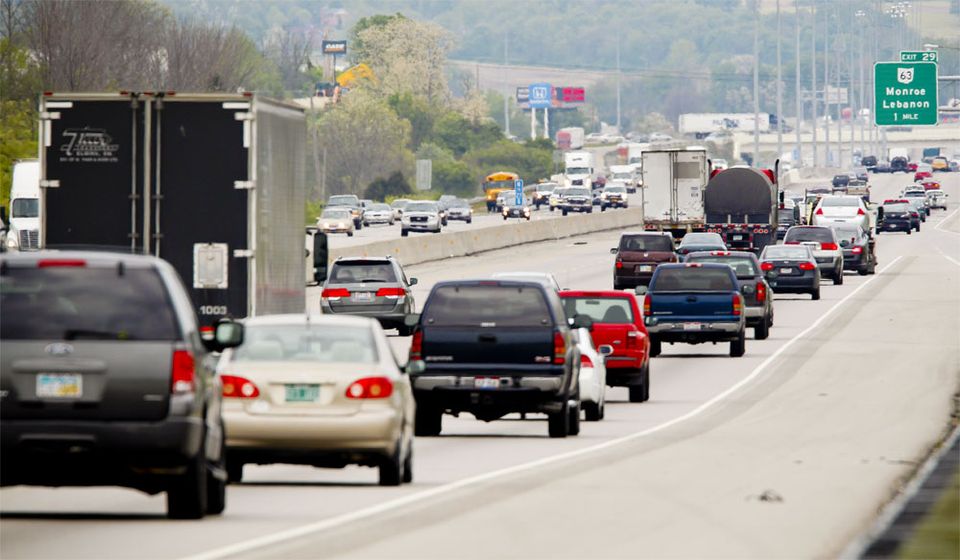
The unwillingness of lawmakers to approve an increase to gasoline taxes is causing otherwise unforeseen effects. State officials from both Ohio and Kentucky have already stated that the reconstruction of the Brent Spence Bridge will require modern tolling, and now Ohio Governor John Kasich (R) is expanding the idea by proposing the use of high-occupancy toll (HOT) lanes on the reconstructed portion of I-75 through Hamilton County, in order to help pay for other state transportation projects. More from the Cincinnati Enquirer:

The Ohio Department of Transportation will launch a study in coming months to examine charging tolls to motorists who want to travel quickly in uncongested lanes. Motorists could pay to use these so-called “price-managed” lanes, or continue to travel for free in lanes jammed with heavy traffic.

Price-managed lanes have become a national trend as states face transportation budget shortfalls and rising congestion in urban areas. The two-year, $105 billion federal transportation bill passed last summer opened the door for states to do more tolling – and Ohio is jumping in.

Gov. John Kasich launched an aggressive effort early this year to consider tolling and other alternative funding to eliminate a $1.6 billion transportation deficit and move up construction schedules on projects across the state…At some point, the I-75 corridor stretching from the Western Hills Viaduct to I-275 could be added to the list of highways eligible for price-managed lanes. That’s because the $980 million I-75 construction projects – separated into two, eight-phase plans known as the Mill Creek Expressway and Thru the Valley – call for one new lane to be added in each direction.

PHOTOS: Downtown and Over-the-Rhine over the course of 2012

2012 has been a pretty terrific year for Cincinnati’s center city. And while I don’t get to spend as much time as I would like back home, here are 28 of my favorite images I captured throughout Downtown and Over-the-Rhine during the course of the year. Here’s looking to an even better 2013!

Consultant says Covington focusing resources in wrong places

MJB Consulting had sobering news for Covington officials when it delivered its report to city officials about how to breathe new life into Covington’s center city. The report stated that there is too much retail and that the existing retail is targeting high-end shoppers that just aren’t there. MJB Consulting also suggested that Covington not focus its energies on the Roebling Point area, and that MainStrasse should continue as a bar destination. More from the Cincinnati Enquirer:

Berne strongly recommended Madison Avenue be the focus of storefront-filling activity because it has historic retail advantages over other streets, such as Pike Street, Martin Luther King Boulevard and Scott Boulevard. With resources at City Hall so limited, it’s important for the city to “triage” which areas are helped to rebuild, he said. Both mayoral candidates, Sherry Carran and Steve Casper, said they agree with Berne’s report. So did three city commission candidates.

Bread & Spice brings vegetarian-focused bakery to Covington

Just over two years ago, Amber Jones realized a dream when she and her husband Jason were able to purchase a historic building in downtown Covington, fix it up, move in to the upper floors, and open a bakery on the first floor. As time progressed, so did Jones’ family and she was forced with making the difficult decision of closing up shop.

Not long after, Jones was in contact with another family-driven entrepreneur interested in operating a bakery out of the 1,000-square-foot space at 212 W. Pike Street.


Bread & Spice along Pike Street in downtown Covington. Photograph by Jake Mecklenborg for UrbanCincy.

“After looking at several restaurant and bakery locations available in Kentucky and Cincinnati, Dawn, my wife, and I decided we really preferred this location,” explained Daniel Tinney, owner of Bread & Spice. “We have both always enjoyed the look and style of older buildings, and we liked the positive neighborhood spirit we found here.”

Daniel operates Bread & Spice with his wife Dawn, and says that the two have waited long enough to pursue a mutual dream of theirs to open a café.

“Through my 20s and 30s I experimented with a variety of cuisines from around the world. I enjoyed savory, slightly spice food, and I learned how to cook them through trial and error,” Daniel told UrbanCincy. “I have been a vegetarian since age 15, and I have often found the options available to vegetarians dining out were either clearly an afterthought, or prepared in a rather bland way.”

To counter that, Daniel explains, that Bread & Spice features a multifaceted menu with a primary focus on vegetarian food that is savory and flavorful.

The Tinney’s celebrated the café’s grand opening on May 9, 2012, and have signed a one-year lease with an option to renew. Bread & Spice is currently open Monday through Friday from 7am to 3pm, Saturday from 8am to 3pm, and is closed on Sundays.

In addition to savory vegetarian options, Daniel notes that the café offers pour-over coffee and baked goods prepared at the store by his wife.

Daily specials and other product information is updated on Bread & Spice’s Facebook Page and Twitter account @BreadSpice daily.

Cincinnati to offer domestic partner benefits

Following through on a campaign promise, Cincinnati City Councilman Chris Seelbach (D) championed through domestic partnership benefits this week. The move will place Cincinnati amongst an estimated 200 other cities from around the country who offer similar benefits to same-sex couples. More from the Cincinnati Enquirer:

Cincinnati became the second city in the region this week to offer benefits to employees’ domestic partners. The measure passed 8-1, with only Charlie Winburn (R) opposing it. Councilman Chris Seelbach (D), the city’s first openly gay council member, promised to introduce the idea as one of his first priorities.