Cincinnati Mayor Mallory heralded as national leader in smart growth movement

Smart Growth America recently produced a series of video interviews with mayors from around the United States. The series, officials say, is intended to highlight prominent elected officials that are taking on leadership roles in promoting smart growth.

The first of those videos features Cincinnati Mayor Mark Mallory. In the video, Mayor Mallory discusses the need to invest in urban centers and make smart infrastructure investments that will trigger job creation and community development.

Specifically, Mayor Mallory touts the recent completion of phase one work at The Banks and ongoing revitalization success in Over-the-Rhine. The approach being taken by Cincinnati is one that intrigued officials at Smart Growth America.

“Thinking about land-use, transportation, housing, environmental, economic development and city planning, and redevelopment projects holistically can be challenging,” Thomas Madrecki from Smart Growth America told UrbanCincy. “But the rewards are that much higher, because when executed successfully, all of those pieces of the puzzle are working together.”

Madrecki says that once that initial buy-in is achieved at a local level, support for smart growth projects like the Cincinnati Streetcar becomes a better reality. Accomplishing that initial task, however, does not necessarily mean that funding and regulatory issues will not also pose problems.

“In a place like Cincinnati, I think that’s very obvious, where you have something like the streetcar take longer to get off the ground because of withdrawn funding promises,” said Madrecki. “Smart growth strategies often require upfront investments that will engender future economic gains while saving the city money on infrastructure and utility costs, but it takes money and the political will to deal with setbacks and opposition.”

Madrecki continued by saying that Mayor Mallory has shown the latter quality in spades, and has quickly become a national leader in the smart growth movement.

As Cincinnati moves forward with additional phases of development at The Banks, and additional renovation work in historic Over-the-Rhine, smart growth champions believe that even additional investment will be needed in Cincinnati’s urban core to help those respective neighborhoods reach their full potential.

One of the greatest challenges going forward for a Midwestern city like Cincinnati will be maintaining the momentum built by Mayor Mallory’s steadfast approach.

“Everyone likes to talk about the ‘next thing,’ but there has to be an element of seeing things to fruition and making sure they fully develop. When that happens and people see the economic and community payoffs, I think it will set a precedent and make future endeavors more likely to succeed right away.”

Metro officials looking for public feedback to develop new regional transit plan

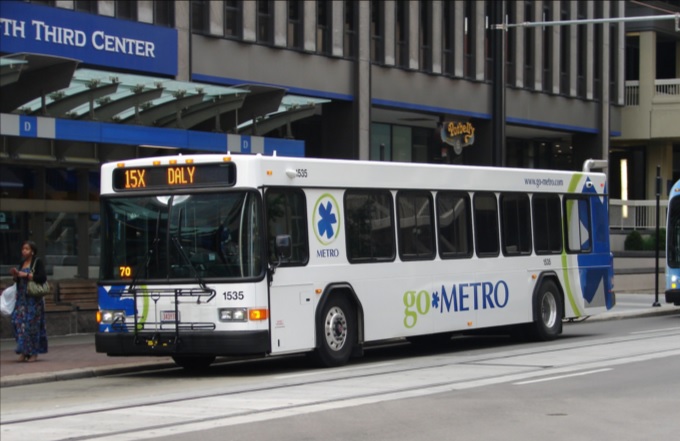
Officials with the Southwest Ohio Regional Transit Authority (SORTA) are looking for public input about how to improve the region’s Metro bus system. The feedback is being solicited in order to update the organization’s plan which was last completed in 2008.

Since the last transit plan was completed, SORTA officials tout the completion of several major items include new articulated buses, hybrid buses, Uptown and Western Hills transit centers, GoogleTransit interface, payment technologies, Google Transit interface and a revamped website.


An articulated bus picks up passengers at Government Square. Photograph by Randy A. Simes for UrbanCincy.

With those initiatives now in place, the transit authority is looking to do more. In an online survey, available now through August 2012, officials ask what could be improved about existing service and what kinds of new service would add value to the regional bus network. The survey also asks whether amenity upgrades like bus shelters, benches, and real-time arrival at busy stops would be of value.

In addition to the online survey, SORTA has held four public meetings to date, with another four scheduled to take place by this Friday. The final four meetings planned will take place as follows:

  • March 28, 2012 from 10am to 11am at 602 Main Street, 12th Floor (Metro’s Offices)
  • March 29, 2012 from 10am to 11am at 7000 Hamilton Avenue (Clovernook Center for the Blind and Visually Impaired)
  • March 29, 2012 from 7pm to 8pm at 3017 Harrison Avenue (Westwood Town Hall)
  • March 30, 2012 from 10am to 11am at 9555 Plainfield Road (Science & Allied Health Building at UC Blue Ash)

The public input gathered, officials say, will help develop a new transit plan that will be released at the end of 2012.

“Through surveys, phone interviews and public meetings, we’ll map specifically where Metro needs to evolve its routes and services,” Metro CEO and General Manager Terry Garcia Crews stated in a prepared release. “This planning initiative will help us define how Metro should best allocate its current resources and prepare for the future.”

Those unable to attend the public meetings can expect a video to be posted online in the coming weeks that will summarize the key points of the public presentations. Additional public meetings will then be scheduled in the fall as the final plan is rolled out to the public.

Officials also emphasize that every person who completes a survey will be entered to win a 30-day rolling Metro pass, with winners being announced in early September.

Parking mandates stymy development in Cincinnati’s urban neighborhoods

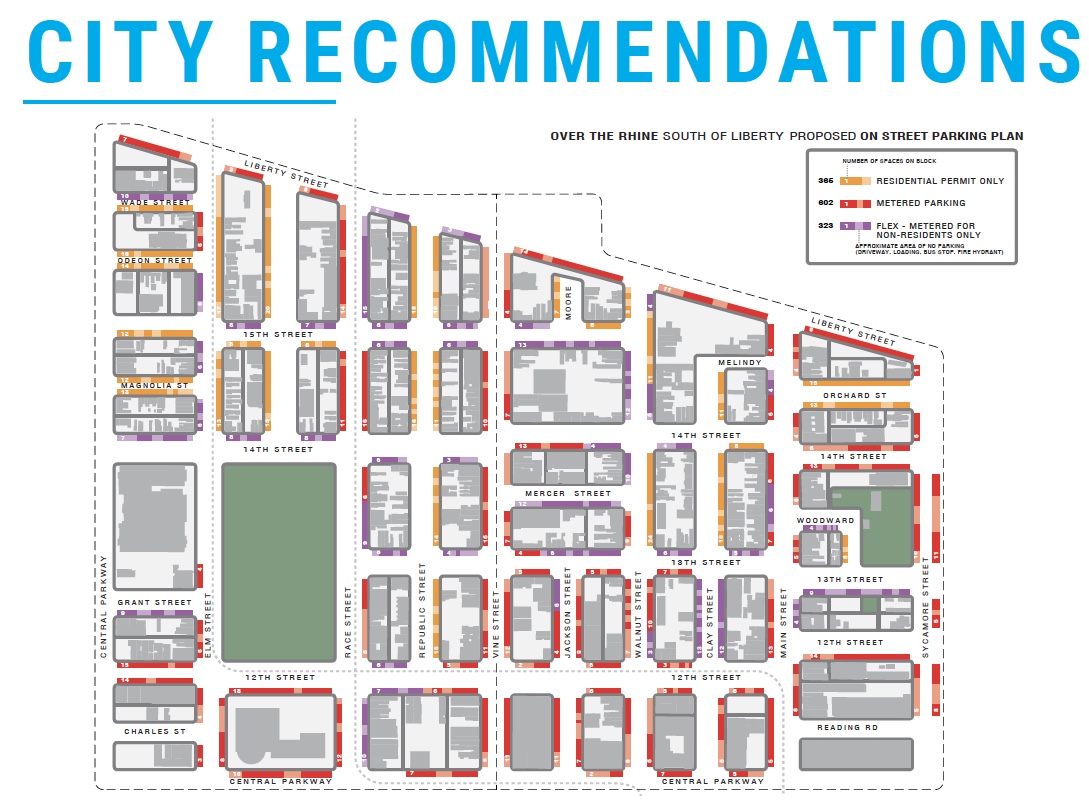
Downtown Cincinnati is home to five Fortune 500 companies, three professional sports teams, local businesses, and according to the 2010 U.S. Census, about 5,300 residents. But the area is also home to more than 35,000 off-street parking spaces.

These spaces once held historic buildings but have been demolished to provide automobile parking over the years. As downtown continues its resurgance, it would be prudent for city leaders to review its outdated parking policies.

In the middle part of the 20th century, many cities, including Cincinnati, developed zoning codes with regulations dictating how many parking spaces are required for different uses. The regulations often accounted for “peak demand,” which is the amount of parking planners believed would be needed at times where demand for parking would be the greatest. For example, accounting for Black Friday-type events where parking lots are only maxed out once or twice a year.


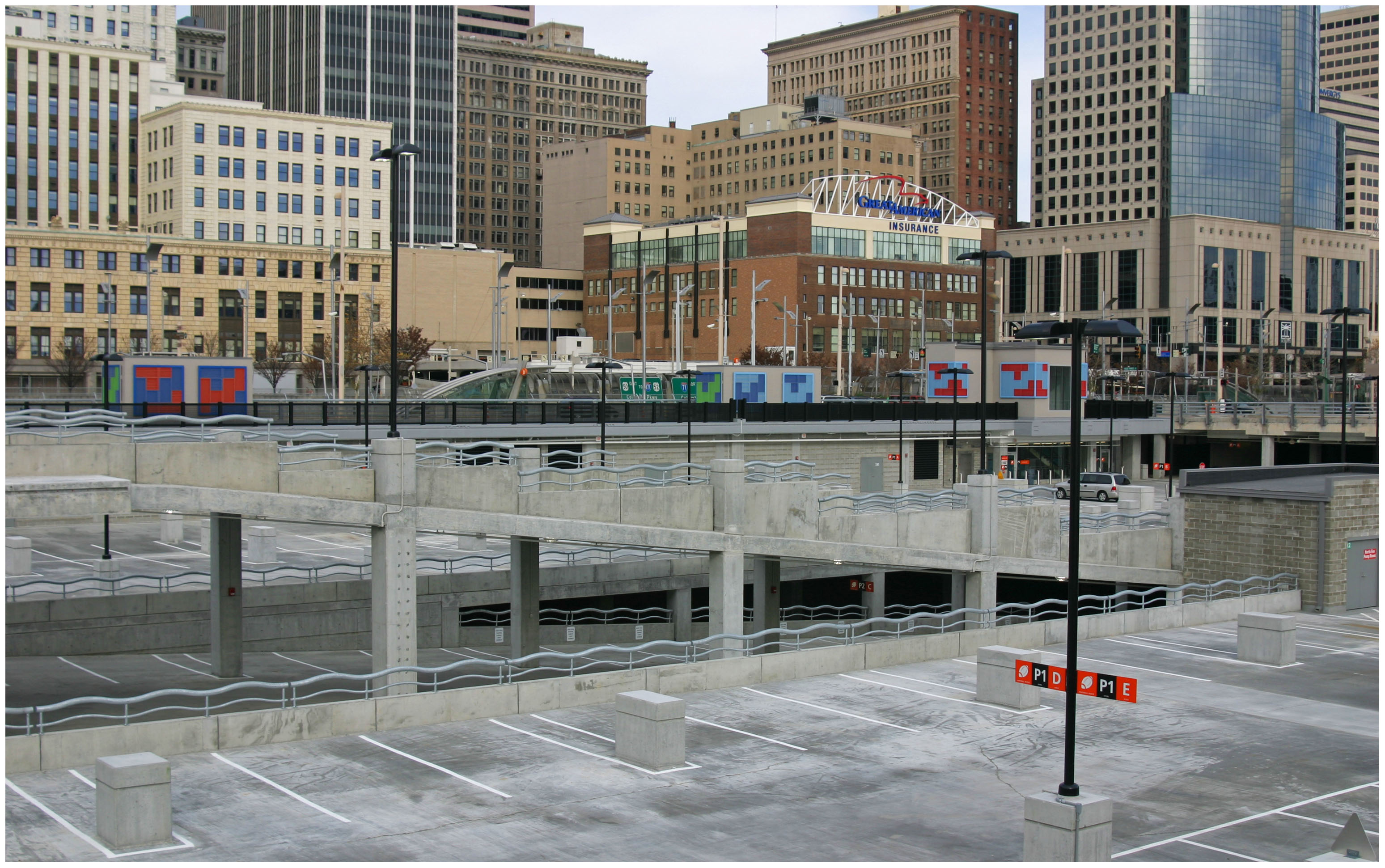
Hundreds of brand new parking spaces in downtown Cincinnati’s Central Riverfront Garage sit unused. Photograph by Randy A. Simes for UrbanCincy.

In his article, The Trouble with Minimum Parking Requirements, UCLA professor Dr. Donald Shoup writes, “Minimum parking requirements are intended to satisfy the expected peak demand for parking at every land use–at home, work, school, banks, restaurants, shopping centers, movie theaters, and hundreds of other land uses from airports to zoos. Because the peak parking demands at different land uses occur at different times of the day or week, and may last for only a short time, several off-street parking spaces must be available for every motor vehicle.”

The demolition of buildings that are mostly historic is also a concern as downtowns struggle to build parking infrastructure that is required by code. Those demolitions, oddly enough, systematically demolish the very things that distinguished them from the suburbs and made the area an appealing destination.

In Nashville, TN, city leaders first removed parking requirements for older buildings, and then moved to remove parking requirements for all buildings in their city center.

“Requiring parking for historic structures that have never had parking is incentivizing their demolition. This puts the property owner in a really difficult position; he must either find parking for the building, demolish it or let it languish in perpetuity.” Nashville city planner, Joni Priest, told UrbanCincy. “If a property owner wants to rehab an historic building – a building that marks the character of a neighborhood and contributes to the fabric of the city – all incentives, including the elimination of parking requirements, should be considered.”

Parking mandates also increase the upfront cost to developers looking to invest in urban neighborhoods. Additional land, often still occupied by historic buildings, must be purchased in order to provide the required parking spaces at approximately $10,000 to $25,000 per space, depending on land and architectural fees. Those costs are then passed on to the consumer, making urban living or starting a small business more expensive.


Contemporary parking mandates can make it nearly impossible for developers and city planners to build neighborhoods like Over-the-Rhine any more. Photograph by Randy A. Simes for UrbanCincy.

Parking requirements also have impacts that are not quite as obvious. Increased parking capacity, in theory, increases the amount of cars in the given area and puts an added burden on downtown streets. Even though the traditional grid pattern is ideal for dispersal of traffic in urban settings, downtowns are ideally designed to accommodate people. Cities that add parking, or widen streets for automobiles, do so at the expense of pedestrians.

Even as city leaders work to implement a plan to increase downtown vibrancy through additional residential space and increased foot traffic, concern for parking punctures the debate on how to further support the urban core.

The urban parking analysis UrbanCincy conducted in 2010 identified many of these problems, but no significant action has been taken to-date aside from the reduction of parking needed to be provided along the Cincinnati Streetcar route.

City leaders need to seriously reexamine their policies on the matter, and they could get started by discussing the following three potential solutions:

  1. Eliminate Parking Mandates – As city leaders were able to do in Nashville, we believe Cincinnati leaders could do the same and remove the minimum parking requirements forced upon investors in the city’s urban core.
  2. Cap and Trade System – First proposed by UrbanCincy in 2010, this innovative system has been implemented in several European cities such as Amsterdam, Hamburg and Zurich. Regulations are designed to limit the total number of parking spaces in an urban area, and provide incentive bonuses while limiting parking. Parking spaces are created on a case-by-case basis and often involve repurposing on-street parking spaces for other uses such as community gardens or parks.
  3. Set Parking Maximums – Instead of dictating a minimum, parking requirements are capped by use or developed density. This strategy has been employed in New York City where development of parking has been limited in an attempt to reduce the impact of automobile traffic on the already densely developed island of Manhattan. Parking maximums seem to work with the availability of alternatives to driving. Therefore; if Cincinnati were to pursue this route, it should be in conjunction with the implementation of more efficient alternatives from Metro including expanding streetcar routes, light rail and bus rapid transit alternatives.

While the need for reform appears evident, a contextualized solution should be pursued by Cincinnati city officials that specifically tailors the policy to localized needs. What may be most important is offering flexibility to small businesses and investors who are looking to invest in Cincinnati’s urban core.

“Removing the parking requirements from downtown zoning allows flexibility for site-specific and program-specific solutions,” said Priest. “Flexibility is key in urban environments. As downtown becomes more comfortable for pedestrians, cyclists and transit users, new development will have the flexibility to build less parking.”

Cincinnati plans to rid city vehicles of fossil fuels by 2025

Like any major city, Cincinnati owns and operates a lot of vehicles, and those vehicles produce a significant amount of carbon emissions that pollute the region’s environmental systems. As city leaders are working on implementing a 100 percent renewable energy plan, they are also developing a plan that would end the city’s dependence on gasoline or diesel motor fuels by 2025.

“There are a lot of things Cincinnati is doing to position itself as a leader in sustainability and going green – both in the public and private sector,” said Larry Falkin, director of Cincinnati’s Office of Environmental Quality (OEQ). “This is part of a total package, and a significant piece, in terms of branding Cincinnati as a progressive city.”

Action on the new Green Fleet Plan was made possible, Falkin says, when City Council approved phase one of the City Fleet Plan in November 2011. The Green Fleet Plan is being developed for the City’s 3,654 vehicles and is expected to be finished by mid-2012.


A Zipcar sits on display at the University of Cincinnati’s main campus uptown. Photograph by 5chw4r7z.

According to a 2011 report, the City’s existing vehicle fleet has an average age of seven years and has a median fuel efficiency of 12.15 miles per gallon. Over the course of a year those vehicles consume more than two million gallons of fuel with more than 95 percent coming from gasoline and diesel. City officials expect their current annual fuel cost of $5.1 million to continue to rise s gasoline prices are expected to escalate in the near future and maintain high prices over the long-term.

Another partial solution presented itself in September 2011 when Zipcar entered the Cincinnati market. Prior to the carsharing company entering the Cincinnati market, discussions about whether the City could leverage such a service were taking place.

The idea would be that the City could contract with Zipcar to provide a certain number of vehicles in the city and the city would then utilize the service for quick runs when employees need to be on-site for inspections or other service calls. The service would not completely eliminate the need for city-owned vehicles, but it is envisioned as lessening the need for the city to own as many automobiles.

“The City is interested in starting a city carsharing service within the city, and we are currently in negotiations with Zipcar,” Falkin told UrbanCincy.

Falkin says that original negotiations came to a halt when the City realized there were purchasing requirements to which it had to adhere. As a result, Falkin says, the City will be moving forward with these discussions but will be looking at a competitive bidding process that will engage more than just Zipcar.

Currently more than half of all of the City’s vehicles are past their current life cycles. Based on original equipment values, it is estimated that to replace the entire fleet would cost approximately $50 million. $5.2 million was budgeted for vehicle replacement in 2012.

Cincinnati leaders should rethink planned rail, trail systems

Ten days ago UrbanCincy sounded the alarm on the proposed Wasson Way Trail, and we feel that due to the large amount of feedback that further explanation is needed.

Tomorrow at 12pm, City Council’s Strategic Growth Committee will discuss the proposal that would turn the Wasson Corridor from a railroad right-of-way into a recreational trail. What UrbanCincy is urging City Council to require is a minimum of 28 feet worth of right-of-way preserved for future light rail use.

Standard designs for bi-directional light rail traffic require a minimum of 28 feet of right-of-way. Along some portions of the Wasson Corridor it may very well be possible to accommodate 28 feet for light rail, plus additional right-of-way for the proposed recreational trail, and in those segments it may make sense to get started.


Looking east as the Wasson Line crosses over Interstate 71. Photograph by Jake Mecklenborg for UrbanCincy.

While there is no funding currently in place to build light rail along the Wasson Corridor, it would be short-sighted to remove one of the best rail transit corridors in the city. This was previously done on Cincinnati’s west side when an abandoned railway used by freight and passenger rail traffic was abandoned and then allowed to be built over and occupied by the Glenway Crossings retail center.

Allowing this to take place offered city and county leaders to reap the rewards of a short-term boost, but it has also created a situation that makes building light rail to Cincinnati’s western suburbs almost impossible. This same thing could happen to Cincinnati’s eastern suburbs should the Wasson Corridor be used by a recreational trail.

Proponents of the Wasson Way Trail project made it clear that many of the supporters also want to see light rail eventually happen, but that we should not wait until that day comes to improve the visual appearance of the corridor. Case studies from all over the United States show, however, that once a former rail line is converted into another use, it is almost always an impossible political task to take that land back for rail purposes.


2002 regional light rail plan for Cincinnati.

In the larger scheme of things, UrbanCincy believes that regional leaders need to take a step back and ask themselves why we are still discussing commuter rail along the Ohio River, and a recreational trail through densely populated city neighborhoods. The priorities should be reversed, and the Oasis Line along the Ohio River should be converted into a recreational trail while the Wasson Line is preserved for future light rail use.

It is estimated that the Wasson Light Rail Line would attract three times the number of riders than the Oasis Commuter Rail Line, while also being significantly less expensive to build and operate. Futhermore, when discussions were held about the Oasis Line, residents and property owners along the line voiced their opposition to such activity and have conversely expressed interest in seeing the railway converted into a recreational trail.

City and regional leaders should maintain the natural beauty of the Ohio River and turn the Oasis Line into an attractive recreational trail that can connect into existing trail networks to the east, and the Wasson Line should be preserved for light rail use in the future. It may seem frustrating to leave the Wasson Line in its current state of appearance, but it will be much more frustrating to jeopardize one of the best potential light rail corridors envisioned for the region.

Uptown neighborhoods looking to reform on-street parking policies

The streets of Clifton Heights, University Heights, and Fairview (CUF) are becoming more congested each year. As the University of Cincinnati (UC) enrollment increases, it has become a struggle to provide enough housing units and places to store automobiles.

This growing population shines light on a problem CUF has struggled with for more than 30 years. It is hard not to notice that Cincinnati’s urban core is on the up-and-up, and the work that organizations like the Cincinnati Center City Development Corporation (3CDC) and OTR A.D.O.P.T. are doing in Over-the-Rhine is making the area more attractive to young professionals, artists, students, and even some older suburbanite emigres. And this is a trend that seems poised to continue as gasoline prices continue to rise.


Proposed parking reform plan for uptown’s Clifton Heights, University Heights and Fairview neighborhoods. Image Provided.

The increased interest in downtown will soon spillover into CUF which itself has many benefits – ample green space (Bellevue Hill Park, Fairview Park, and tree-lined streets), a variety of restaurants and nightlife, unique cafes, beautiful houses and of course its proximity to UC, Findlay Market, Over-the-Rhine and the Central Business District. An influx in residents means more people, more cars and tougher competition for car storage in a neighborhood proudly built in an age before automobile parking was mandated by law.

It was with all of this in mind that the CUF Neighborhood Association (CUFNA) trustees formed a committee in the summer of 2010 to develop solutions to the parking problem. The committee, made up of longtime residents, landlords, students, new residents, and business owners, has worked for the past year-and-a-half to develop a plan to serve the parking needs of both residents and visitors alike.

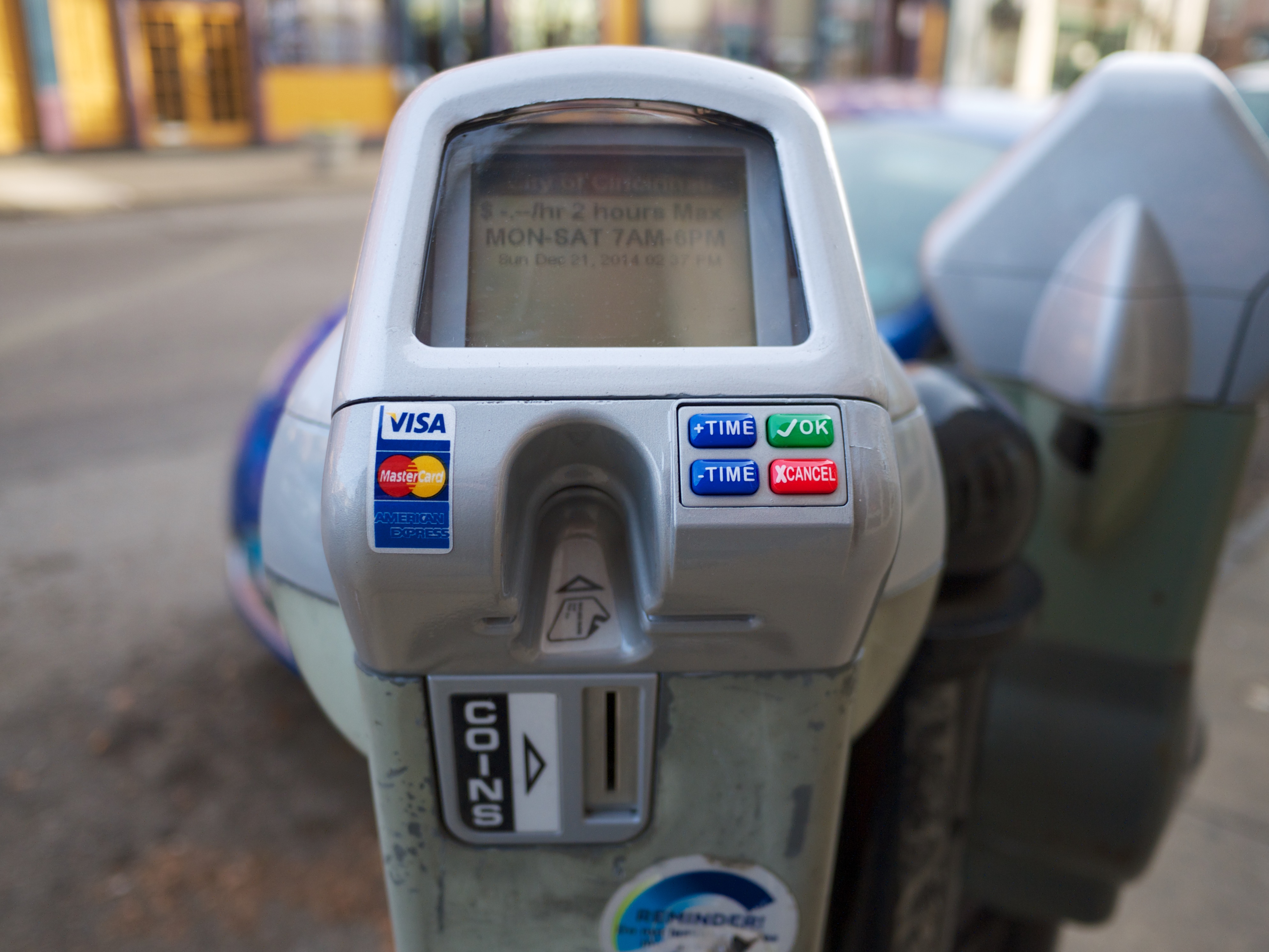
The committee’s proposal is similar to San Francisco’s metered parking program, and calls for a market-based approach to allocating on-street spaces. It is envisioned that this will provide residents with greater certainty in parking while allowing better access for shoppers and visitors. The plan, which would ensure the constant availability of parking spaces, is projected to pay for itself and provide a substantial new source of revenue for either the City or a specific neighborhood improvement district.

The parking proposal calls for the introduction of priced monthly permits or smart-metered shorter term parking for the roughly 3,000 on-street spaces in Clifton Heights, University Heights and Fairview. The city’s Department of Transportation & Engineering (DOTE) would then be responsible for setting permit and meter prices each month to target an 85-90% occupancy rate.

The prices, advocates say, would be skewed in favor of neighborhood residents and would ensure that some spaces are always available when they are needed. Currently, residents and visitors alike can spend up to an hour circling not only on weeknights, but throughout the day as well.

Preliminary numbers indicate the revenue from permit sales alone could pay for around-the-clock enforcement while still generating a surplus of between $50,000 and $200,000 annually. San Francisco and Washington, D.C. have proven the popularity of such programs. With increasingly congested streets these cities began to set market forces on the efficient allocation of on-street vehicular parking.

Advocates of the idea say that they are still working to get the city’s support, but hope that progress can be made on the reforms sometime in 2012.

Cincinnati’s Wasson rail corridor should not be converted into recreational trail

In the post-industrial United States cities all across America have been left with an abundance of rail right-of-way that once served industrial properties. Cities have since struggled to find a use for these rail corridors.

In many cases the rail right-of-way either gets built over, or makes room for some other use – most typically a park or trail of some sort. The most famous, and perhaps most unique, example of this is New York City’s Highline which converted an abandoned freight rail corridor into an elevated park. In most cities, however, much simpler trails are developed in order to cater to bicyclists and pedestrians.

These are great projects, but in the cases where rail right-of-way is needed in order to introduce rail transit, they should not be done. The acquisition of right-of-way can be one of the most difficult hurdles to clear when developing rail transit, so if you have a prime corridor intact, you should do everything in your power to preserve it for future rail transit.


Map of the proposed Wasson Way Project.

The reason this is particularly important in Cincinnati right now is because on March 6, advocates of what is being called Wasson Way Project will present their ideas for converting the Wasson Corridor into a bike/ped trail to City Council’s Strategic Growth Committee.

The idea is not a bad one on face value, but should it proceed it would eliminate one of the most valuable rail corridors in the city. A corridor that could connect neighborhoods like Hyde Park, Oakley, Evanston, Norwood, Mt. Lookout, Fairfax and Mariemont with light rail and eventually connect those neighborhoods to the region’s two largest employment centers – uptown and downtown – without much additional track or right-of-way acquisition.

“I know of no example in the United States where a former railway that has been converted to a bike/hike trail has ever been returned to passenger rail service,” explained Cincinnati transit advocate John Schneider (aka “Mr. Transit”). “Once it’s gone, it’s gone.”

Rail corridors that run through areas of limited potential transit ridership like the Oasis Line should be redeveloped into trails. It just makes sense. There is less automobile traffic and the riverfront trail provides a scenic ride for bicyclists and connects its users to a string of riverfront parks.

The Wasson Line, however, is ripe for light rail service with its densely populated neighborhood, vibrant business districts and key attractions along the line. The Oasis Line should become a bike/ped trail, but the Wasson Line should not.

Unfortunately the exact opposite is progressing for both of these lines in Cincinnati. Hamilton County officials continue to explore funding options to turn the Oasis Line into a commuter rail corridor, and a citizen-led group is strongly advocating for the conversion of the Wasson Line into a bike/ped trail.

While UrbanCincy supports conversion of some rail right-of-ways into other uses, we believe it needs to be done in a thoughtful manner that considers the future transit needs of the region. The Wasson Line is too valuable to convert into a bike/ped trail and should be preserved for an urban light rail line.

The upcoming committee meeting is scheduled to take place at 12pm on Tuesday, March 6 at City Hall (map). We would like to urge you to come out and support the future of regional light rail in the Cincinnati region, and request that the Wasson Corridor not be converted into a recreational trail.