Rate of tower construction accelerated in Cincinnati in the 1960s

While 1960 to 1990 is often thought of as a low point for the architecture, planning and engineering professions for a variety of reasons, it turns out it was also one of the more active time periods in terms of construction.

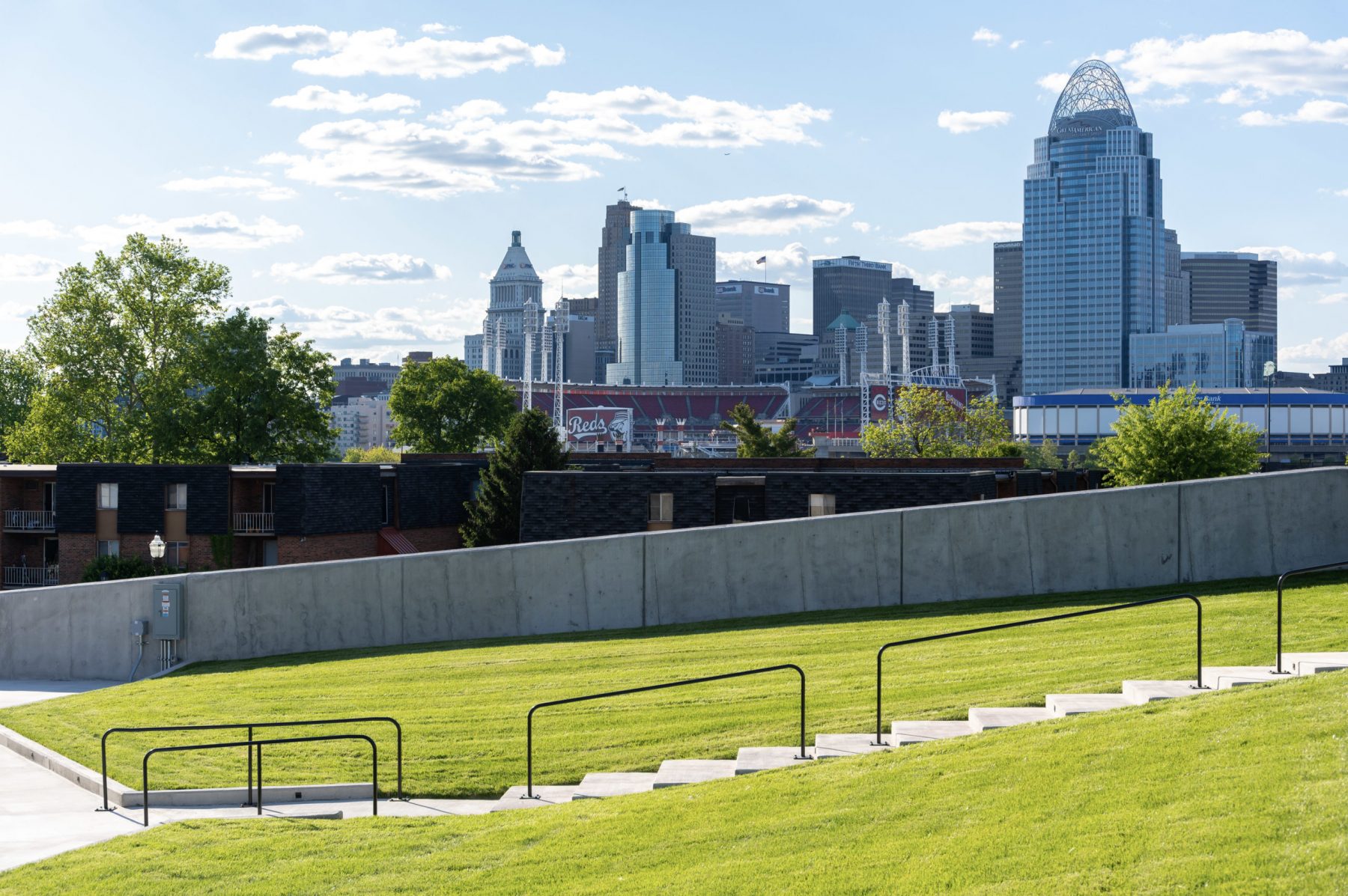
Cincinnati is well known for being an old-growth city that acquired its urban form either during the 1800s or early 20th century. But the central business district that defines the city’s skyline, and thus the region’s national and international image, was largely built during that time frame.

While researching contemporary boom periods in Cincinnati, UrbanCincy dove a little deeper into the data and broke down the construction trends for buildings over 100 feet (8-10 floors) in height. While much growth occurred during the 1800s, only three structures over 100 feet were constructed during that century – Roebling Suspension Bridge, City Hall and the Shillito Building.

There was an initial surge in construction of buildings with this minimum height from 1900 to 1929 which included the construction of 35 such structures. There was then a lull from 1930 to 1959 as global wars took their toll on domestic building projects. Cincinnati then went on a three-decade surge of high-rise construction that included 61 new towers at least 100 feet in height.

Since 1990, the trend has been fairly steady with an average of eight new towers being constructed each decade. While analyzing contemporary patterns, it appeared as if Cincinnati was on a trend to exceed that average set by the past 30 years.

The region is barely into the next decade, but two towers of more than 100 feet have already been completed including the city’s new tallest tower. There are also plans on the books to construct another six towers (TBD Hotel at The Banks, Office Tower at The Banks, dunnhumbyUSA Tower, Christ Hospital Research Tower, Children’s Hospital Research Tower, Holiday Inn Hotel & Suites) in the near future.

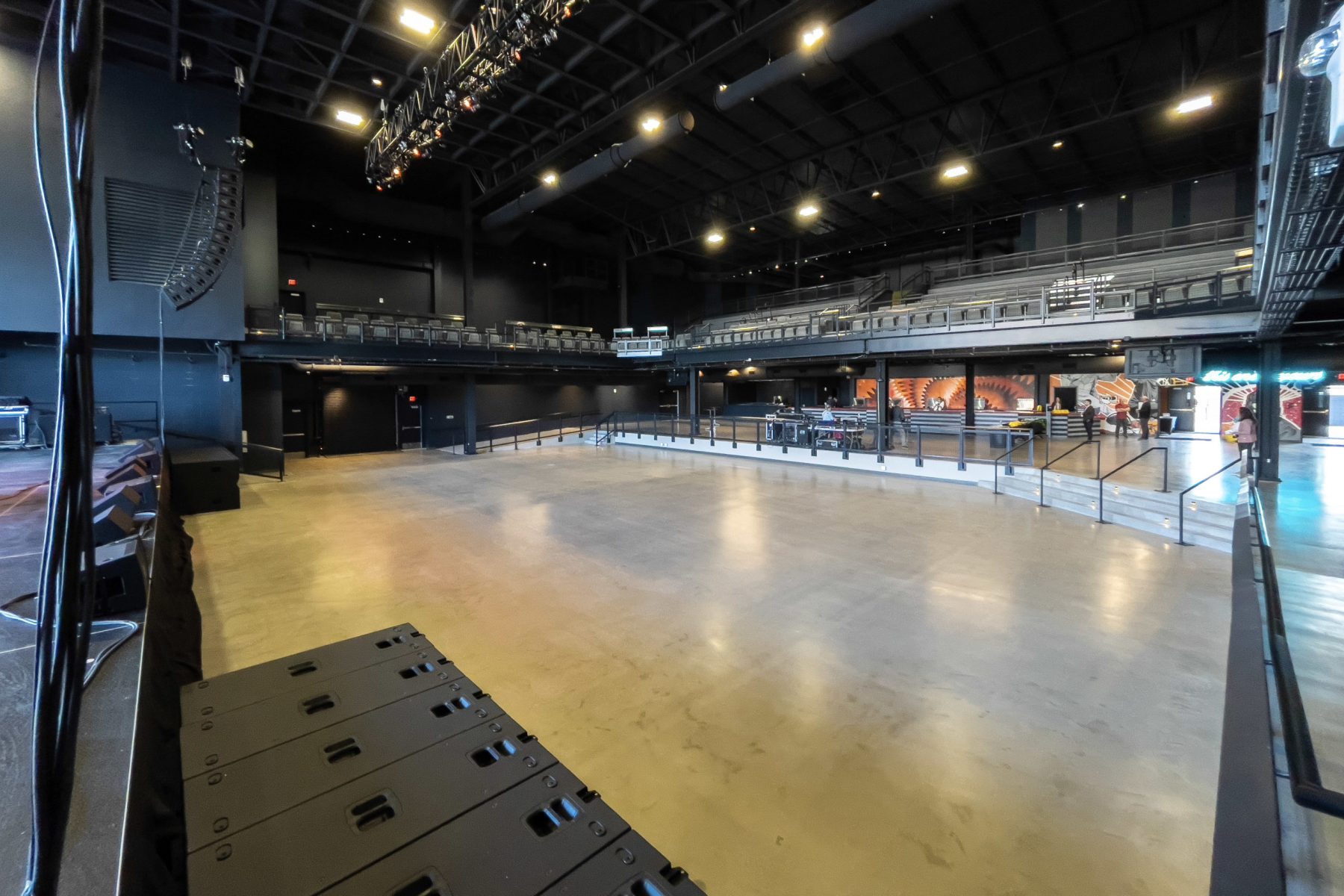
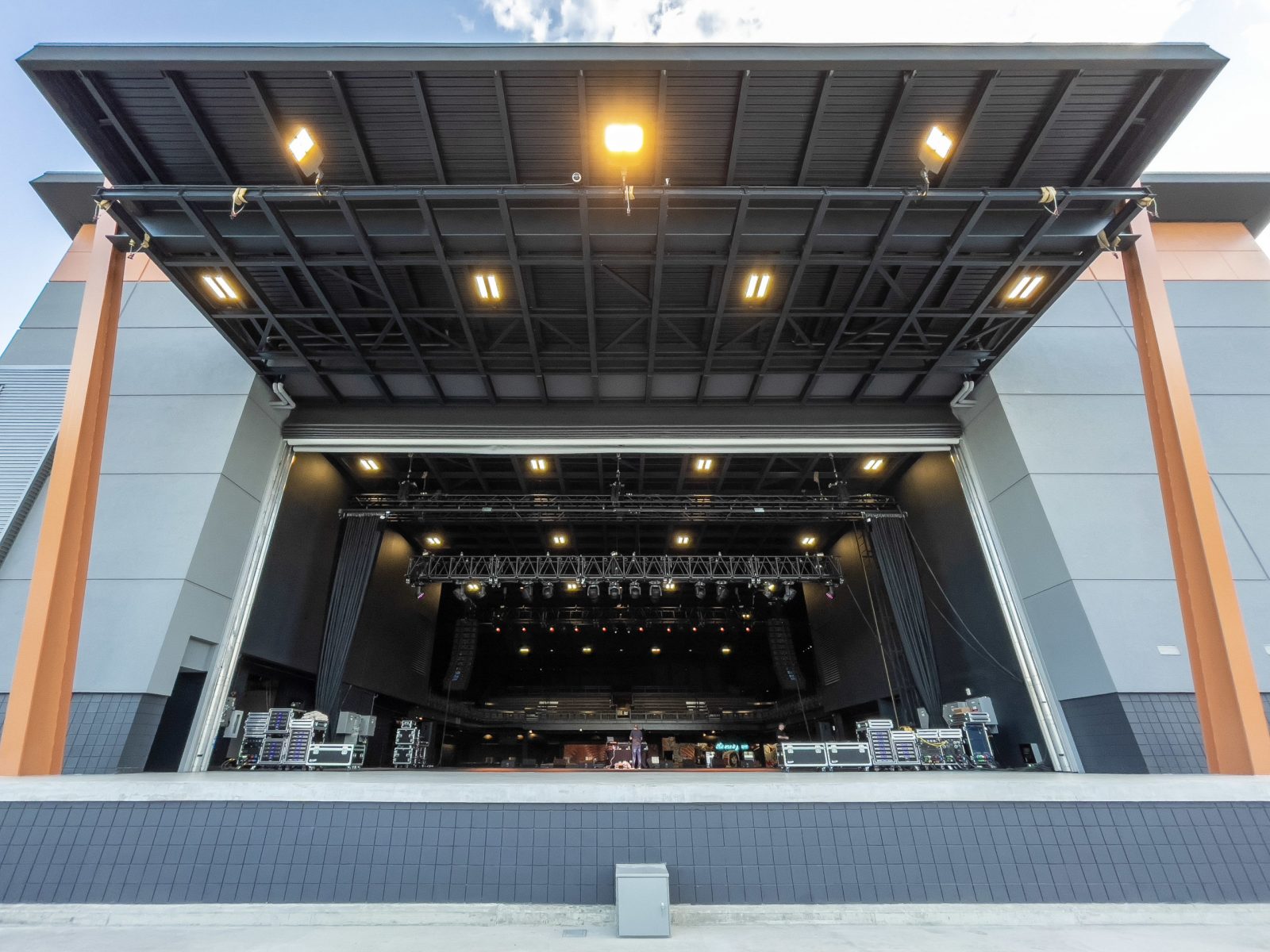
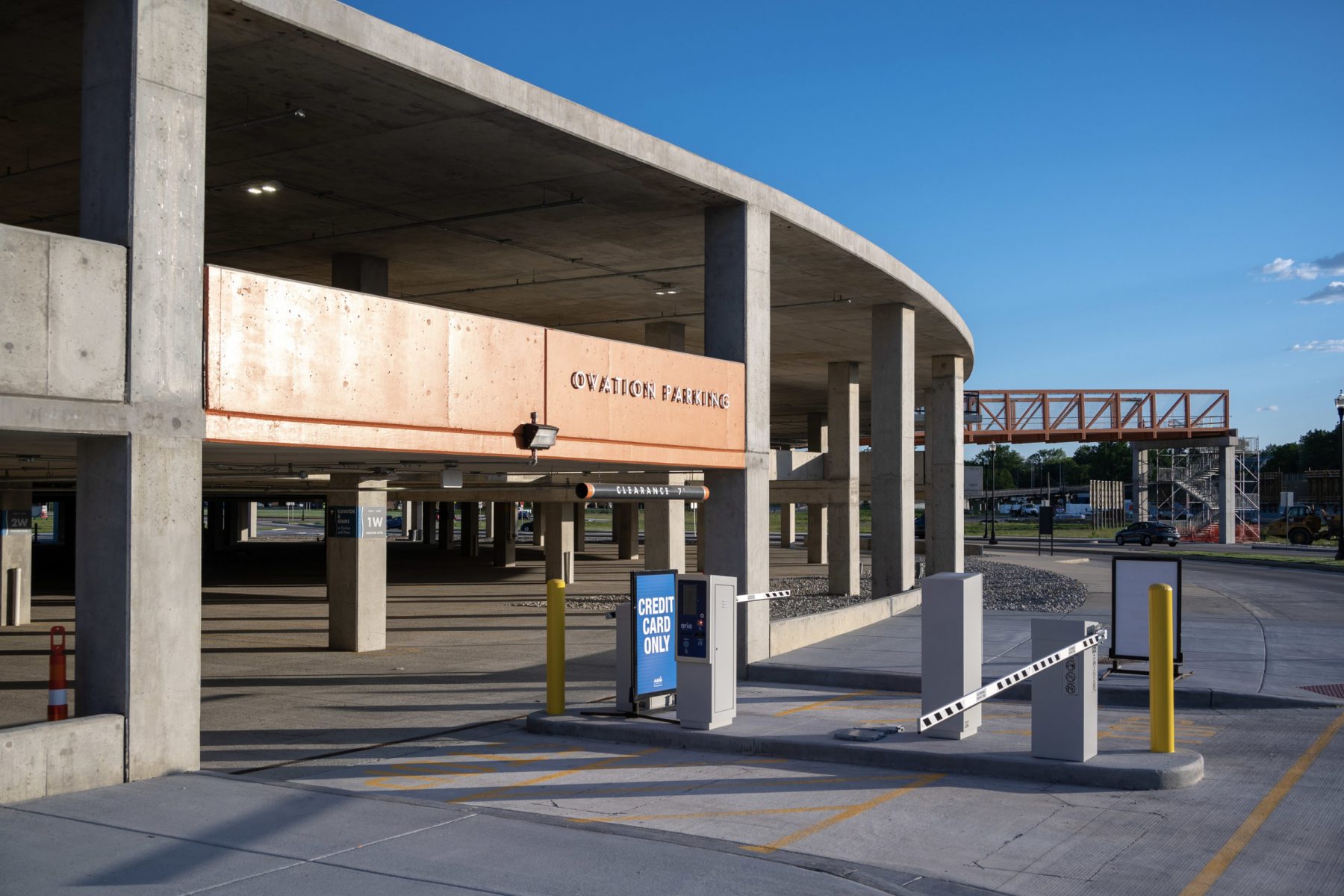
Additionally, there is a strong likelihood for more tower construction through other lingering development plans (SouthShore 2, Hotel at Horseshoe Casino, Ovation, One River Place).

Tower construction in this decade may indeed surpass recent averages, but the large share of new construction in Cincinnati is actually made up of low- to mid-rise structures. What do you think…has the trend towards skyscrapers begun to wear off in favor of more human-scale development?

Mayor Mallory highlights successes, commits to transit in seventh State of the City address

Mayor Mark Mallory (D) focused on the positives during his seventh State of the City address, and he challenged Cincinnatians to get involved in projects or policies they want to see become reality.

As part of that challenge, Mayor Mallory identified a formula for success built on five elements – pride, commitment, investment, partnership and promotion.

“Every neighborhood should celebrate its own history,” Mayor Mallory urged during the roughly 47-minute address. “We need to do more to celebrate our history in order to create more pride in Cincinnati. Pride inspires people to commit to improving our city. Pride also gets people to invest in making this city a better place.”

Mallory then turned his attention towards the region’s urban core and defended why his administration focuses so much on time and energy there saying it is the economic engine for the entire region.

“There is no West Chester without downtown Cincinnati. There is no Mason without downtown,” Mallory exclaimed. “There is no sub without the urban…it all works together. A strong and healthy and vibrant downtown Cincinnati benefits the entire region.”

Mallory drove the point home by categorically identifying downtown Cincinnati as a success story which has landed several new headquarters recently, and has seen dunnhumbyUSA grow from a staff of three employees in 2003 to a projected staff of 1,000 employees in 2014.


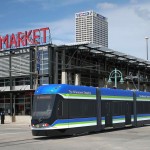
The design of Cincinnati’s modern streetcar vehicles (coloring scheme not final).

The mayor continued by saying that the many companies and residents moving to the region’s urban core are doing so because of the investments being made by City Hall. One of the most high-profile of these investments is the Cincinnati Streetcar, which the mayor highlighted and identified a five-phase expansion plan in conjunction with two regional light rail lines.

The future phases of modern streetcar extensions include a route running from Over-the-Rhine to Uptown, a line running from Uptown to Walnut Hills, a center city loop serving Newport and Covington, and a line extending from Over-the-Rhine to Union Terminal. The two regional light rail lines would service the I-71 and I-75 corridors.

Mayor Mallory then took the opportunity to announce that Spanish-based Construcciones y Auxiliar de Ferrocarriles (CAF) will manufacture Cincinnati’s five initial modern streetcar vehicles at their United States facility in Elmira, New York.

“Before we are even finished with the first phase, we have started work on the second phase,” Mallory revealed. “I have already asked for federal funds to study which route will be used to connect to our assets in the uptown area like UC, the hospitals, the zoo, and the EPA.”

The mayor shifted directions and emphasized the importance of public safety, using recent progress in Over-the-Rhine as success stories.

“It used to be that on Sunday mornings people would come to Over-the-Rhine to buy a week’s worth of drugs,” said Mallory using the Gateway Quarter as his example. “Now, on Sunday mornings, people come to Over-the-Rhine to eat check and waffles at Taste of Belgium.”

Mayor Mallory concluded the speech by highlighting the importance of becoming a more global city to the crowd of more than 350 people.

“In China, they are talking about our emergency preparedness. In Saudi Arabia, people are looking at Cincinnati for potential business investment. In Germany, people are talking about our cutting edge efforts in the area of sustainability. And right now, all over the world, people are talking about the World Choir Games.”

“We have created an international presence, and because of that buzz, we were able to attract the World Choir Games. Make no mistake, this is the greatest opportunity to showcase the city that we have ever had…and we earned it.”

Cincinnati’s central riverfront captured in new timelapse video

A Cincinnati-based marketing firm based out of Mt. Lookout has produced a new timelapse video of the central riverfront. The abbreviated video only lasts a total of 47 seconds, but highlights several different vantage points of Cincinnati’s urban core.

The most interesting component of the video is the unique angles in which Stimulus Worldwide captures the center city. The boutique marketing firm set up shop along the Newport waterfront high atop Mt. Adams to produce the video. Be sure to enjoy the way the city lights playfully dance upon the Ohio River.

Take an aerial tour over Cincinnati’s center city [video]

Clay Rasmussen and Matthew Tyler Ray were producing a short film entitled Coming Attractions, and in the process were able to capture some interesting aerial footage of Cincinnati’s center city. Rasmussen, an Electronic Media student at the University of Cincinnati, says that he is interested in video and film production.

The seven-minute video starts out along the Ohio River in Newport, then circles Cincinnati’s central business district. The small helicopter then returns to the Northern Kentucky riverfront for a landing, but not before capturing some very unique video imagery of the center city.

It is not clear in the information provided as to who operated the small aircraft, but it appears that Rasmussen utilized Stratus HelicoptersAround The City tour, which costs just $45 per adult and last approximately seven minutes.

Cincinnati’s urban Kroger stores face a unique design opportunity

It is no secret to Cincinnati residents that less than four blocks away from the Kroger world headquarters sits one of the most neglected stores in the city, if not the region. The Kroger store at the 1400 block of Vine Street in Over-the-Rhine has long sat forgotten while the rest of the urban core continues to gain steam, revitalize and grow.

Less than a 10 minute drive away sits Vine Street’s newest sister store, the 128,000 square foot store built as a new development off highway 471 in Newport, Kentucky. The darling of big box grocery stores houses a Starbucks, a jewelry store, full clinic and pharmacy, furniture selection, and expansive grocery section including natural foods and a sushi station.

There is something of stigma surrounding the Vine Street store that hangs over the place, encouraging unfamiliar potential customers to avoid it at all costs. I set out on a mission to break down the rumors and cut through to the core differences and to hypothesize how the Kroger Company can capitalize on their greatest and most under-utilized asset.

Prices:
Rumor has it that the company marks up its prices in the center city, forcing poor residents and dumb yuppies to pay more than their suburban counterparts. This is not true. From California Pizza Kitchen ($5.79) to Jif Creamy Peanut Butter ($2.40) to Roma tomatoes ($1.19 per lb), the price point at the two Krogers is identical.

Expiration Dates:
After only one visit, it is hard to say whether or not the company consistently ships food that will expire sooner to their urban location. Multiple visits will confirm the pattern. At this time, comparing eggs, milk, produce and meat, the expiration dates for the Newport store were consistently further out than Vine Street’s. The VSK had expiration dates on milk of 6/12-6/17, and eggs from 6/7 to 6/24. Newport, in comparison, dated expired milk at 6/20-6/22, and eggs at 6/24-6/30. Every bagged green at 1400 Vine (including spring mix, spinach, kale, and salad mix) was on manager’s special – preparing to go bad with 6/6 expiration dates. The expansive selection of bagged greens in Kentucky (only 3 bags of which were of collard/kale greens) expired from 6/7-6/14.

However, the rest of the produce section was filled with vibrant, ripe fruits and veggies that one could find just as easily at Findlay Market. Red strawberries, taut and plump cucumbers, pears, peaches, fresh smelling blueberries and leafy (unpackaged) greens. In fact, the tomatoes at Vine Street were in better shape than the ones at Newport (see the pictures above)


Compare and Contrast: Over-the-Rhine [LEFT] and Newport [RIGHT] stores.

Selection:
The stark difference in size and footprint of the two stores obviously allows for a great disparity in food selection. The question that remains: is the food that IS available in the smaller footprinted store as good a quality as the bigger store? The answer: yes and no.

The Vine Street Kroger has a range and variety of items for sale – one can purchase cat food and cream cheese; pomegranate juice and pancake mix; the necessities are all there- and at the same price as any other Kroger in the city. Is there a need for a jewelry store, cheesemonger, or 15 types of lint rollers in a smaller market? Of course not. Other successful urban stores carry only one or two styles of an item in order to maximize room for a wider variety of merchandise.

A big disappointment I encountered was in the meat aisle. Instead of a traditional deli there is a “hot counter” with fried chicken and other breaded delicacies shoved under a heat lamp, approximately 4.5 feet wide. The fresh meat section is very limited.

When deciding between chicken at Vine Street I was presented with two options: one style of Tyson all natural chicken thighs (no breast meat or tenderloin) at 3.99 per lb, and a 10 lb bag of cheap skin-on chicken drumsticks for 6 dollars with an expiration date of 6/14. I have been told that there is usually Kroger brand skinless chicken breast – they may have been out today. Obviously the selection at Newport Kroger is much wider.

Design:
The biggest hurdle that faces the Vine Street Kroger is its outdated and dingy design. The store is poorly lit, with outdated signage, low ceilings, and worn tile on the floor. The physical layout of the food selection is not well thought out. Entering the store puts the shopper smack in the middle of the processed bread and Hostess snack aisle. Conventional healthy shopping wisdom that dictates shopping around the perimeter of the store- it does not work in this case, as Aisle One is candy and sugary cereals.

The Newport Kroger, in sharp contrast, has stained concrete floors, tall ceilings, modern signage, and skylights that bring daylighting into the expansive space. Much attention and detail has been put into the displays, with vignettes on the wall indicating dairy, produce, bread, and meat sections.

What’s the solution?
The Kroger company is at a crossroads. They are the biggest grocery chain in the nation, yet are allowing a key future growth opportunity to slip out from under them: the urban market. Stores like Aldi, Target, Safeway and Whole Foods have already established urban stores with smaller footprints and a more limited selection that are clean, well designed, and offer an attractive selection for urban residents.

Kroger should seize this opportunity to place pride in their most central store. In this formally trained interior designer’s opinion, the best thing that Kroger could do would be to renovate the Vine Street store as a flagship model for urban Kroger markets across the country in other major downtown districts, and to open a second location in the Banks development or Tower Place Mall.

Reduce the barrier to the street by modifying the parking lot – behind the building or eliminating it all together. Bring the same successful elements from the Newport store into the smaller design – modern colors, skylights, ample lighting, polished concrete floors, easy to read and well designed signage, and improve the quality (and shelf life) of the selection that is available.

Questions arise about improving the neighborhood – will a nicer store price current residents out? It’s already been established that the price points of both the newest and most run-down Kroger in the region are identical. The only difference is the physical store itself. Improving the most central and urban store will only attract more shoppers to the store, resulting in gained revenue. No matter one’s skin color, annual income, or place of residence, affordable, quality food that is readily accessible in the neighborhood is something everyone deserves.

I encourage Over-the-Rhine residents to utilize the Vine Street Kroger for their grocery needs in addition to gems like Findlay Market. The staff there is incredibly friendly and welcoming, and if we want the status quo to change, we need to show the company that our pocketbooks are willing to support something new.

Bikes+Brews 2011 takes place this Saturday in Cincinnati’s urban core

This Saturday marks the return of Bikes+Brews, one of the official Bike Month activities of the City of Cincinnati’s Bicycle Program. Bikes+Brews is the perfect segue into next week’s American Craft Beer Week as it will offer riders the opportunity to explore the city’s urban core while learning a bit about craft beer and how it plays into both the past and future of Cincinnati.

The ride will depart historic Findlay Market promptly at 1pm, so feel free to come early and enjoy a beer at the market’s biergarten and some hearty grub from Cafe de Wheels, who will be on hand beginning at 10:30am.

A handful of guides will be on hand, identifiable by navy blue Over-the-Rhine All-Star t-shirts, to help answer questions and keep the ride on track. This year’s ride includes a total of nine stops along a seven-mile course beginning and ending at Findlay Market. This will allow participants to meet at a single location, and offer a convenient parking location for those that will be driving to the event. That being said, it is strongly recommended to use either pedal power or public transportation.

From Findlay Market the ride will proceed past the Samuel Adams Brewery in the West End, and on to Rock Bottom Brewery on Fountain Square. A quick jaunt across the river into Northern Kentucky will take participants to Keystone Bar & Grill in Covington, then Newport’s Hofbrauhaus, the region’s largest brewpub.

After all riders have sufficiently stabilized themselves, post-liters of German brew, the peleton will cross back over the Ohio River, via the Purple People Bridge, for a quick stop at the newly opened Holy Grail at The Banks. Our final three stops will take us back into Over-the-Rhine, the heart of Cincinnati’s brewing history, for pints at The Lackman Bar, Neon’s Unplugged and finally our end destination of Market Wines somewhere in the vicinity of 6:30pm.

Bikes+Brews 2011 is part of more than 40 Bike Month events, and is free and open to the public. Admittedly, this year’s ride will be a bit more strenuous both in route, distance, number of stops and brews consumed, so please be sure to keep yourself hydrated with water. That being said, riders have complete autonomy to join late or forgo portions of the trek to either finish early or meet us at a future stop. Bikes+Brews 2010 was a great success, and one of our favorite events of the past year, and UrbanCincy is looking forward to building on the momentum this year. Let’s Ride!!!

Southgate House to host Jason White concert this Friday

The Southgate House will welcome Jason White this Friday, April 22 for a concert highlighting work off his new album entitled The Longing which is due out May 7.

The Cleveland-born musician is coming off two critically-acclaimed albums, Shades of Gray and Tonight’s Top Story. The show at the Southgate House will include David Mead in addition, and prior to, White’s headlining performance.

While excited for the Cincinnati show, Jason White and promoters have expressed concerns about the scale of the audience as they see an increasingly saturated music marketplace and entertainment industry throughout the United States.

“These days, everybody is so inundated with entertainment information, but most of it feels to me like it’s mass-produced,” said White. “So what I hope is that people can listen to this record and hear that it’s homespun, that the songs were written very carefully and come from a sincere place, and that the process was very organic and genuine.”

The concert at Southgate House (map) is scheduled to begin at 8:30pm. Tickets cost $10 in advance (buy online), and $13 the day of the show.

Southgate House photograph by Dan Hewins.