Categories
Arts & Entertainment News

‘Pride on Main’ Will Set the Stage for this Month’s Second Sunday on Main Festival

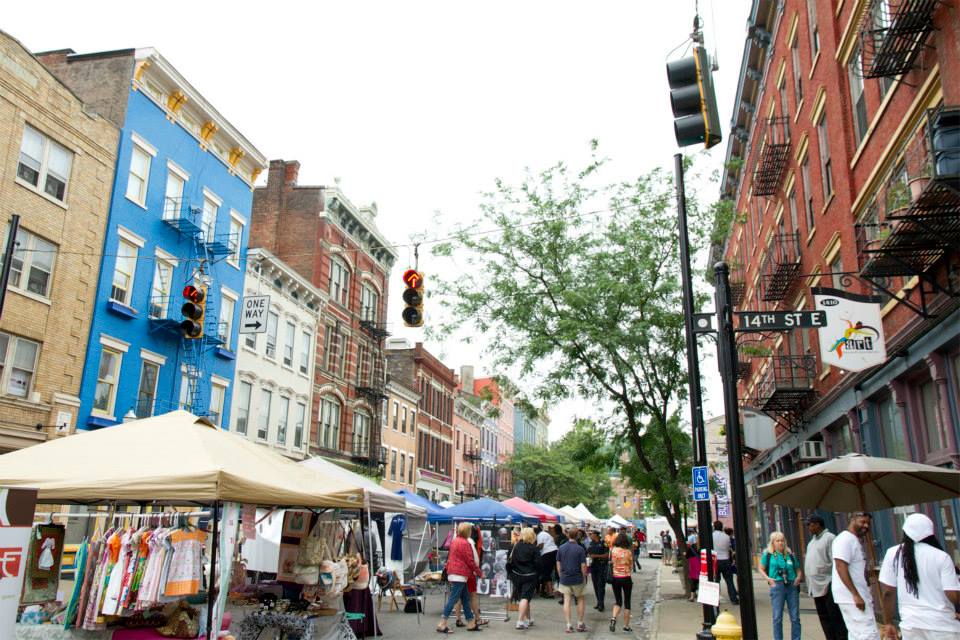
Second Sunday on Main (SSOM) returns to the streets of Over-the-Rhine this Sunday, from 12pm to 5pm, after drawing a record attendance and number of vendors for its first festival of the season last month.

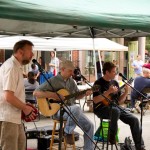
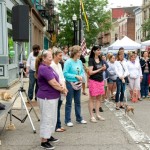
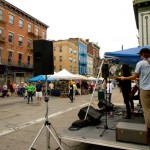
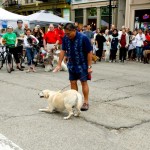
As is the case with all SSOM events, this one will once again feature dozens of local arts and crafts vendors, local food and beer, live music, food trucks, street performers and more.

The event is free and open to the public, so even if you don’t have a bunch of cash to drop, you can swing through for a leisurely stroll and people watch in what is Cincinnati’s oldest and most prominent Open Streets events.

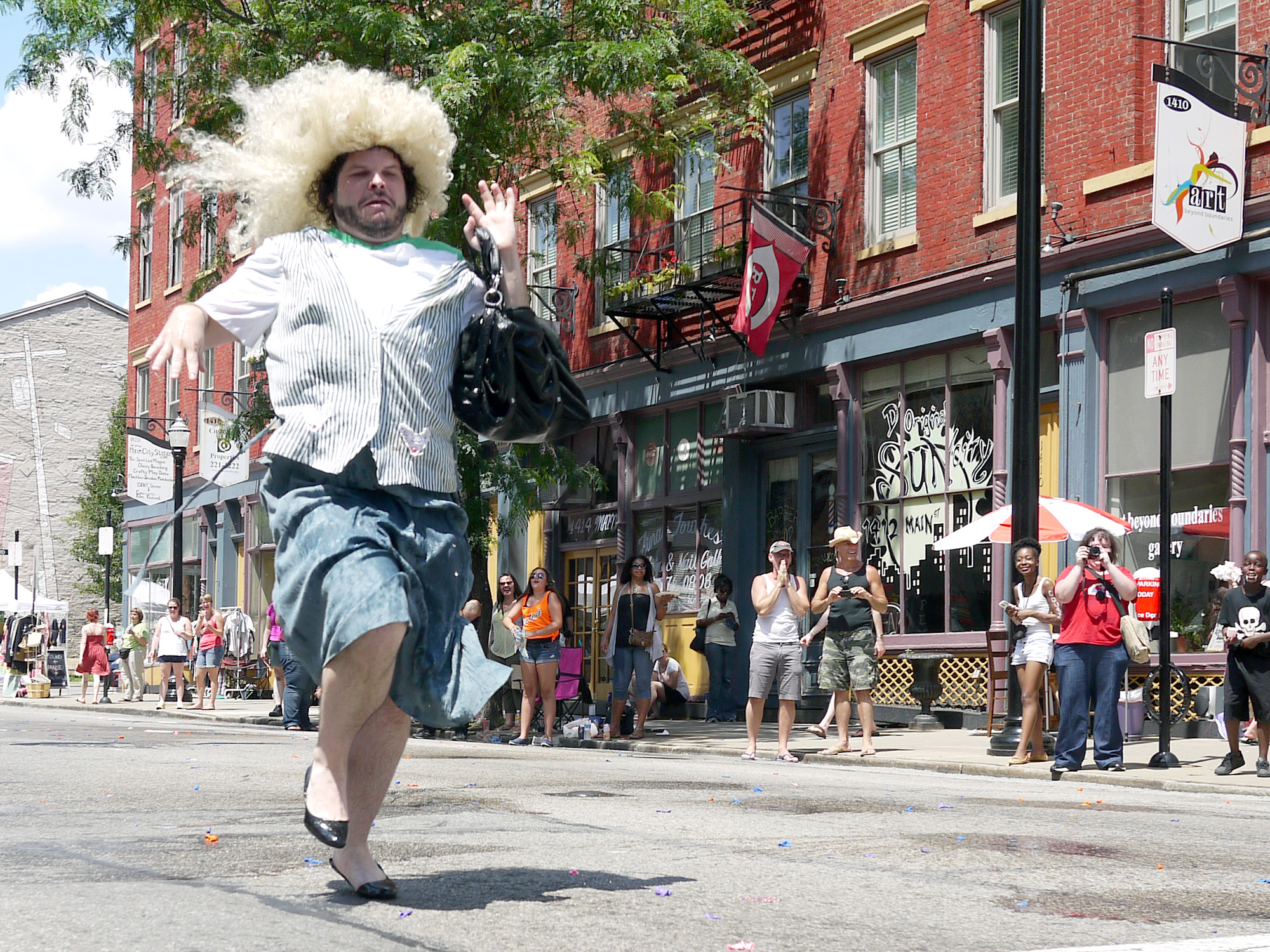
Each month event organizers change up the theme for SSOM; and this month’s event is called Pride on Main. To complement the theme there will be the Missed OTR Drag Queen Contest and the famous Drag and Tryke Races, both of which will have their proceeds go to benefit Pride 2015.

This is the ninth year the OTR Chamber of Commerce has put on Second Sunday on Main. For those who haven’t attended in the past, the event stretches from Thirteenth Street to Liberty Street along, you guessed it, Main Street. There are also small segments of side streets that are closed off and include some additional activities.

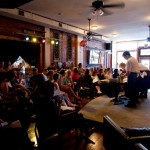
There will also be a cooking demo by Chef Jose Salazar and speciality cocktail demo by bartenders Andrew Rettig and Steven Clement at 2pm inside Mr. Pitiful’s. Throughout the day, Art on the Streets will also be working on a crosswalk painting project at Main and Liberty Streets.

A full schedule and list of music performers and other details can be found on SSOM’s website.

EDITORIAL NOTE: UrbanCincy is an official media partner of Second Sunday on Main; and is proud to support the city’s oldest open streets festival.

Categories
Business News

REPORT: Cincinnati Region Failing at Developing Walkable Urban Places

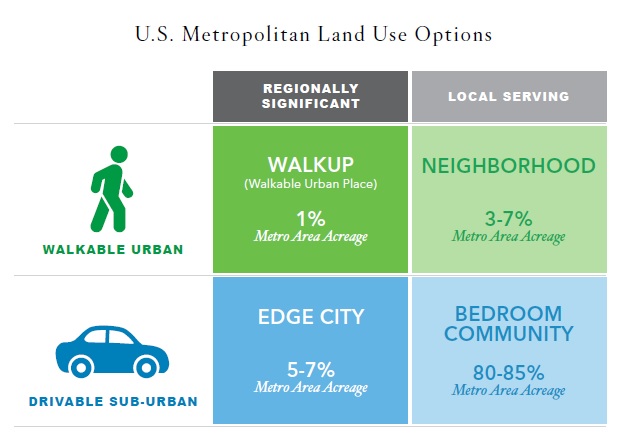
U.S. Metropolitan Land Use OptionsA recently released report conducted by The George Washington University’s Center for Real Estate & Urban Analysis in conjunction with LOCUS: Responsible Real Estate Developers and Investors, a coalition of Smart Growth America gave the Cincinnati region low marks for its walkability and growth patterns overall.

The report, entitled Foot Traffic Ahead, attempts to quantify the seemingly surging movement of people back into cities with a desire for walkable places.

The idea is that developers, investors, government regulators and financiers understood the model that successfully built America’s suburbs during the second half of the 20th century, but that a new model is needed with that era now behind us.

“Over the next generation, walkable urban development will spur even greater economic growth as demand for walkable urban development is met. The future growth of walkable urban places could provide the same economic base in the 21st century that drivable sub-urbanism did in the mid- to late-20th century. However, this growth will not be realized without appropriate infrastructure, zoning, and financing mechanisms at the federal, state, and local levels.”

Therefore, the authors of the report, in coordination with a Brookings Institution methodology developed in 2012, defined two primary forms of land use: drivable sub-urban and walkable urban. They also defined the two primary economic functions of those forms as being either regionally significant or local-serving.

Of the four potential combinations of these forms and functions, Foot Traffic Ahead focused on the regionally significant walkable urban places (WalkUPs) in each of the nation’s 30 largest metropolitan regions. When considering all of this, the authors of the report identified 558 WalkUPs nationwide, with 66 of those located in the New York City metropolitan area alone.

Out of the 30 regions studied, Cincinnati was ranked 20th with seven total WalkUPs in the region. Those seven WalkUPs, the report found, contained 33,234,000 square feet of office and retail space, or approximately 15% of the region’s total.

When compared with other regions, an astonishing 100% of the office and retail space located within WalkUPs were within the central city. What this means is that while Cincinnati’s urban core is extremely walkable, virtually nothing outside of it is. As a result, Cincinnati fell at the low end of the six regions classified as ‘Tentative Walkable Urbanism’.

“Four of these six metros – Houston, Columbus, Kansas City and Cincinnati – have 93% or more of their walkable urban office and retail space in the central city; virtually no walkable urbanism exists in their suburbs,” the report noted. “These four metros continued the expansion of drivable sub-urban development patterns.”

It is worth repeating that the methodology of this analysis places a priority on regionally significant places that contain at least 1.4 million square feet of office space, 340,000 square feet of retail space and a Walk Score value of at least 70 points throughout 100% of its area.

Such requirements penalize smaller and mid-size metropolitan regions that have less of this space overall. Perhaps illustrating this is the fact that while Cincinnati ranks 20th overall in this ranking, it comes in at 15th overall in terms of its number of WalkUPs per capita. Had the threshold for defining WalkUPs been lower, then perhaps more areas could have been considered into the overall WalkUP calculations for the region, and thus included smaller hubs outside of the central city.

When compared with the other regions, the future looks even grimmer for Cincinnati. In that ranking, Cincinnati falls five spots and into the category of ‘Low Potential for Future Walkable Urbanism’.

As is true with the existing rankings, the future rankings place a high significance on high volumes of real estate development. With regional growth rates hovering around 0.4%, it offers little opportunity for a region like Cincinnati to make dramatic changes to its development footprint.

However, when compared with the other regions, Cincinnati also appears to be lagging in terms of developing a robust regional transit system with both bus and rail, and lacks regional coordination on developing walkable urban developments. The report did however note that Cincinnati’s streetcar system currently under-construction serves as a bright spot that alone may shift the region from the ‘Low’ to ‘Moderate Potential’ category.

“These 13 metropolitan areas continue to lose market share in office and retail locating in their WalkUPs, continuing the mid- to late-20th century trend toward drivable sub-urbanism,” the report concluded about the regions with low potential in their future rankings.
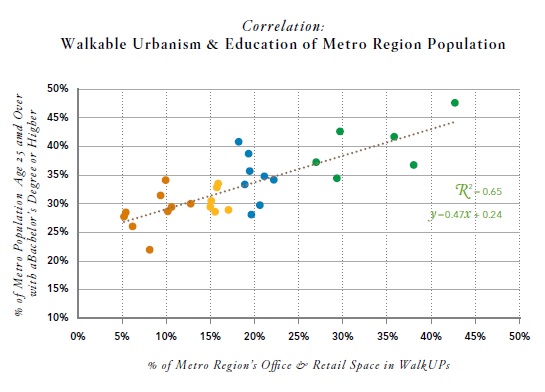
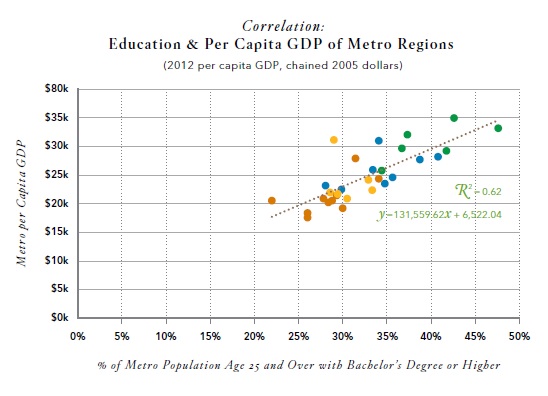
Walkable Urbanism and GDP Performance Walkable Urbanism and Educational Attainment Education and GDP Performance

“In addition, they do not have substantial office rental price premiums. With 5% to 13% of office and retail space in WalkUPs, these metro areas have a long way to go to fully develop walkable urbanism.”

The real interest in the report, however, comes with its overall findings and correlations, as that is where the dire future outcomes may lie for the Cincinnati region.

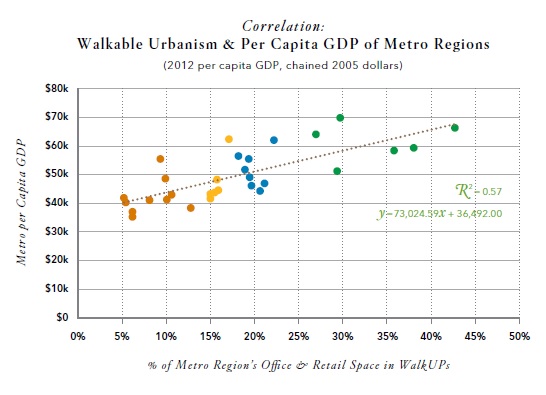
In the report it found that regions with more walkable urbanism also had higher GDP performance, and that those same regions tended to have higher educational attainment.

“Given the relationship between educational attainment and walkable urbanism, and the relationship between educational attainment and per capita GDP, it is not surprising that walkable urbanism and per capita GDP are also positively correlated.”

According to the report, the six highest-ranked regions have a per capita GDP approximately 38% higher than the 10 lowest-ranked regions.

Of course, these findings alone cannot indicate whether walkable urbanism causes highly educated persons to move or stay away from certain regions, or whether places become more walkable due to there being more highly educated people there. But the correlations are strong enough that it is something that should make regional business and political leaders rethink the way in which Cincinnati develops.

“Although more research needs to be done to understand why walkable urbanism is correlated with higher per capita GDPs and education levels, this evidence suggests that encouraging walkable urbanism is a potential strategy for regional economic development.”
Categories
Up To Speed

No, Historic Preservation Does Not Inhibit Urban Growth

No, Historic Preservation Does Not Inhibit Urban Growth.

While the development boom being experienced in New York City, Paris and London isn’t quite the same in Cincinnati, the Queen City does share in some of these issues surrounding historic preservation. Some believe that protecting and preserving historic structures is a barrier for development.

This has been seen most recently in the easy approval of the updated Lytle Park Historic District boundary, which is now much smaller than it once was. The reason such changes received easy approval at City Hall is because of the promise of new development, but is that the correct way to think about it? More from Next City:

American preservationists, too, have become so accustomed to pushing for the enforcement of preservation laws that they often are stereotyped as gatekeepers of nostalgia. Those who fought New York Mayor Michael Bloomberg’s plan for upzoning part of Midtown Manhattan were demonized as anti-development. In truth, they were trying to protect the existing development. Polyphonic streetscapes of buildings of varying heights, styles and forms blended with smart new design attract people.

[…]

Preservationists are mediators between cultural heritage and economic demands, and they often don’t win what they want. The rambling mass of buildings joined under La Samaritaine’s walls and the stately mass of Cleveland’s Fifth Church of Christ, Scientist are far from evident in the remaining fragments. Yet what has actually been saved in both cases is invisible: the integrity of preservation laws, the enhanced value of developments that incorporate elements of the past and the continuity of urban character that makes cities continue to be desirable places. Years later, no one will see the battle scars from these fights, but they will see interesting works of contemporary architecture based on historic elements, thanks to preservation activists fighting overbearing design.

Categories
Development News Transportation

KZF Releases Preliminary Designs, Cost Estimates for Wasson Way

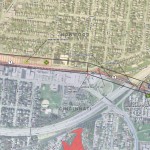
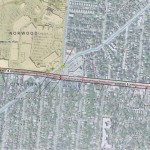
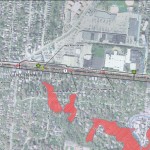
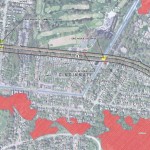
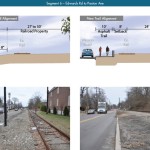
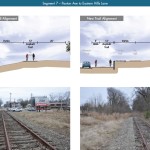
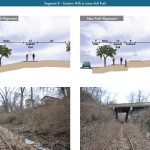
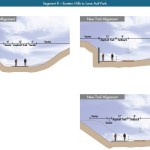
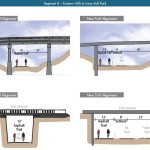
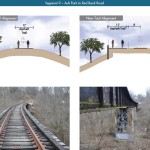
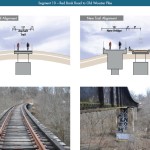
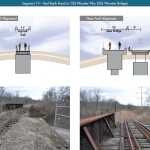
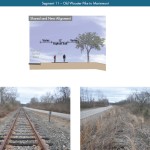
A newly released feasibility study, produced by KZF Design, finds that construction of the 6.5-mile Wasson Way Trail would cost anywhere from $7.5 million for just a trail to $36 million for both a light rail line and trail totally separated from one another.

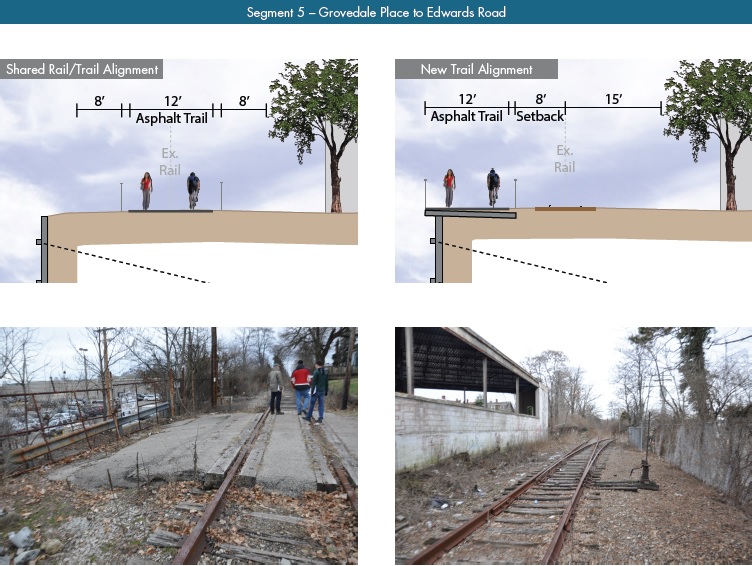
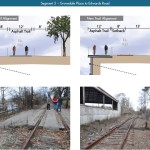
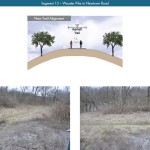
The cost estimates vary so much due to the three potential design options studied. The lowest cost alternative looked at placing a 12-foot-wide trail along the entire existing rail alignment. This, however, would make the inclusion of a future light rail line extremely difficult.

The most expensive alternative would construct an entire new trail alignment that does not interfere with any existing rail right-of-way. This would include the construction of several new bridges and completely preserve the ability to easily construct the long-planned light rail line adjacent to the new trail.

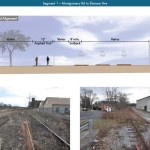
Alternative B, which was recommended by KZF and priced at $11.2 million, was a bit of a hybrid. It would include a 12-foot-wide trail offset from the existing rail alignment, but utilize existing rail right-of-way at pinch points along the corridor.

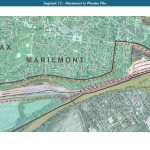
The 45-page study is the first detailed look at the corridor, which has been hotly debated and discussed over recent years. Much of the controversy has surrounded whether or not both light rail and a trail can be accommodated. KZF’s findings appear to show that much of the corridor could in fact accommodate both, but that some segments may prove to be difficult, albeit feasible.

If project supporters are able to advance the trail plan, KZF estimates that it would connect eight city neighborhoods and approximately 100,000 residents with an overall network of more than 100 miles of trail facilities.

“It is hard to build in the urban core, and to find an intact corridor ripe for development is a unique thing,” explained Eric Oberg, Manager at the Midwest Rails to Trails Conservancy. “If this is done right, this can be the best urban trail in the state of Ohio. I have no doubt.”

Some of the most difficult segments of the corridor are the nine existing bridges where the right-of-way is extremely limited. If both light rail and trail facilities are to traverse this corridor together, additional spans will be needed in order to have safe co-operation.

In addition to introducing what may become the region’s best urban trail and light rail corridor, some proponents also see it as an opportunity to fix other problems along the route. Most notably that includes the congested and confusing intersection of Madison, Edwards and Wasson Roads near Rookwood Pavilion.

While the newly released feasibility study offers the most detailed analysis of this corridor to date, the City of Cincinnati has yet to close on its purchase of the former freight rail line from Norfolk Southern.

City officials are reportedly in negotiations with Norfolk Southern now, and have made an initial offer of $2 million. In April, Mayor Cranley’s Administration also allocated $200,000 to the project.

Categories
Arts & Entertainment News

First Second Sunday on Main Event Draws Large Crowd, Record Number of Vendors

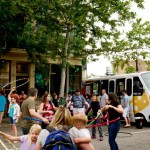
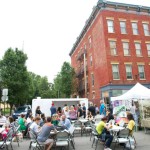
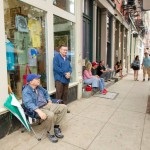
Second Sunday on Main (SSOM) is arguably Cincinnati’s oldest open streets event. Organizers kicked off its ninth season earlier this month and welcomed scores of visitors out into the middle of Main Street through the heart of Over-the-Rhine.

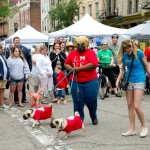
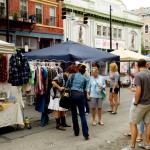
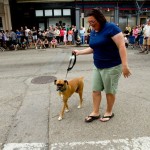
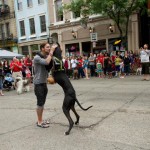
The free event is organized by the Over-the-Rhine Chamber of Commerce and is held once per month from June through October. The first event of the 2014 season included food trucks and street food, live music and art performances, a dog competition, celebrity chef series, local arts and crafts vendors, beer and great weather.

June’s SSOM event included a record number of participating vendors, with organizers citing more than 100 took part in the event. The attendance was also estimated to be higher than average with approximately 2,000 visitors.

As with past years, each of this year’s events will include a distinct theme. For June organizers appropriately played on the idea of it being a neighborhood block party. In July, however, Second Sunday on Main will take on a more colorful feel as it will celebrate Pride on Main Street.

The following 23 photos were taken by Brooke Shanesy from Nostalgia for the Present.

EDITORIAL NOTE: UrbanCincy is an official media partner of Second Sunday on Main; and is proud to support the city’s oldest open streets festival.