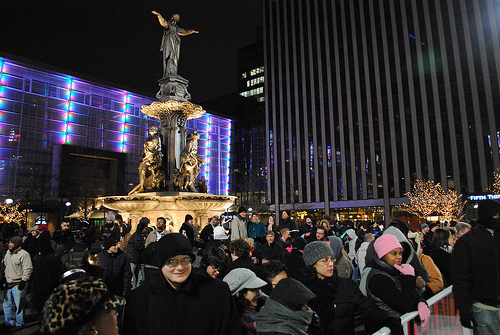
Max Grinnell is an author, historian, and professor who excels at sharing unique perspectives of American cities. For each of the last two summers, Grinnell has visited Cincinnati to host a series of walking tours that offer a historical look at the city’s urban core. This June, Grinnell is bringing back the tour, which looks back on the Cincinnati of 1943 and compares it to our modern city.
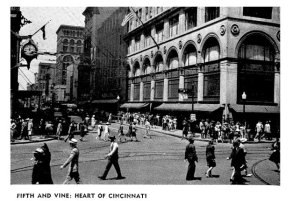
The walking tour is inspired by Cincinnati: A Guide to the Queen City and Its Neighbors, a book published in 1943 for the Federal Writers’ Project. This book was a part of the American Guide Series, also known as the WPA guides, which was a program funded by the New Deal to employ writers during the Great Depression. Today, the book serves as a snapshot of 1943 Cincinnati, when the city’s population was 455,610 and now-iconic structures like Carew Tower and Union Terminal were just a decade old.
This time period was “a bit of an ‘amber’ moment” in Cincinnati’s history, Grinnell told UrbanCincy, “as this was the Queen City at its industrial peak. I consider [Cincinnati’s book] one of the better city guides produced by the Federal Writers’ Project.”
The 60-minute tour will include many of the same elements as previous years, but will also touch on buildings that Cincinnati has recently lost and others that have been repurposed over time.
Craft brewing has taken the nation by storm and as evidence from the Ohio Craft Brewers conference held here in Cincinnati a few weeks ago, the phenomenon shows no sign of slowing down. One factor that has eluded many speculators predictions of “Peak Craft Brew” is the fact that many craft breweries come in different shapes and sizes. Even locally, whereas Rhinegeist and Madtree push for more distribution, smaller scale breweries have opened with the focus on neighborhood Main Streets like Brink Brewing in College Hill.
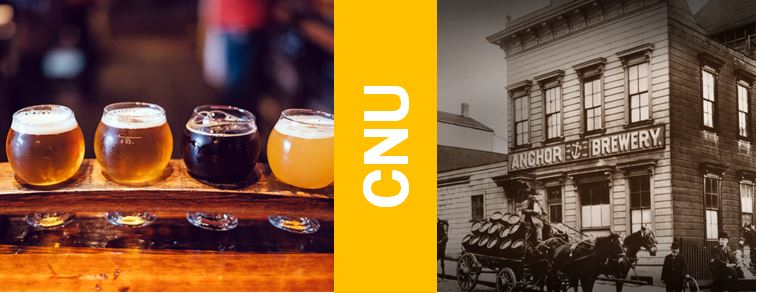
This trend is the focus of the Congress for New Urbanism’s Midwest Chapters first regional event. Titled, ” The New Neighborhood Brewery,” the event will focus on neighborhood craft breweries and their impacts on building neighborhood revitalization efforts throughout the Cincinnati, Northern Kentucky and Dayton regions.
“We’ve seen the positive impacts craft brewery scene has had on local neighborhoods and we want to get to the heart of what is their formula for success,” said Jocelyn Gibson, the Event Organizing Committee Chair, “Our hope is that this event will spur more communities to consider craft breweries as a tool for neighborhood success”
The event will take place on Friday March 3, starting at 12:20 PM at the Woodward Theater in Over-the-Rhine. It will conclude with a panel discussion and happy hour within viewing of the annual Bockfest Parades march down Main Street. Tickets are $25 a person and can be purchased via CincyTicket.
The event will be feature speakers from the Over-the-Rhine Brewery District, local brewers, real estate experts and neighborhood advocates. It will also provide continuing education credits for the American Planning Association.
The Midwest chapter of the CNU is dedicated towards advancing the issues of revitalizing urban neighborhoods in cities and towns across the region. The organization has three central goals including reclaiming public space for people, reactivating and reconnecting vibrant neighborhoods and championing urban development that is enduring, adaptable and human scaled. The chapter committee is in the process of becoming a regional chapter of the organization spanning from western Pennsylvania to central Indiana and from Lake Erie to Lexington Kentucky.
Woodward Theater is located within a block of Cincy Red Bike, Metro bus routes #17,19,24 and 16. And is two blocks north of the Cincinnati Bell Connector Hanke Exchange Station at 12th and Main.
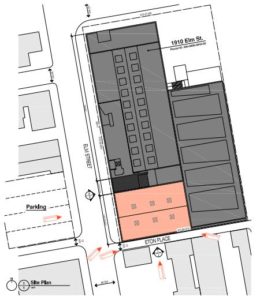
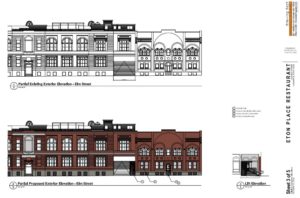
Rhinegeist, the popular brewery in Over-the-Rhine, recently received approval from the city’s Historic Conservation Board to make alterations to the space at the southwest corner of their building, at the intersection of Elm and Eton Place. Specifically, they requested to make the following modifications:
– Install a new lift/elevator and stairwell entrance
– Install new two-over-two windows
– Repair and improve stairs at entrance
– Install new entrance door
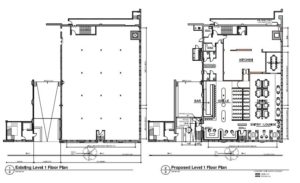
Within their application, they include proposed drawings for the space. The renderings are of a restaurant that includes a kitchen, bar, dining area, and a private event/dining space. Rhinegeist declined to comment or provide any further details on the space, saying they are not yet ready to make a detailed announcement.
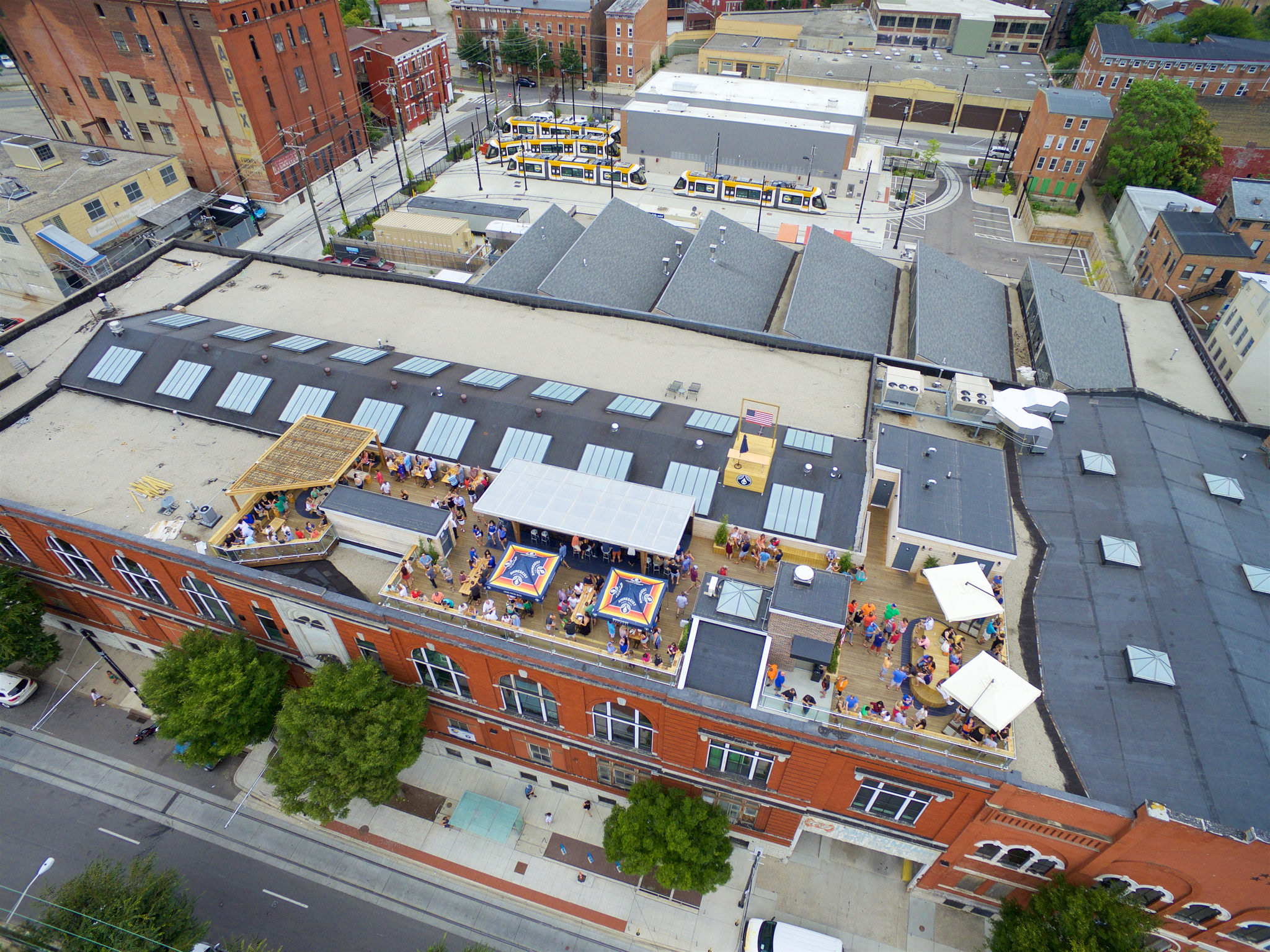
This development follows a flurry of investments that Rhinegeist has made since opening in June of 2013. Rhinegeist then invested $10 million to expand operations. This included the purchase of their building from Orton Development for $4.2 million in November of 2014, new brewing equipment in early 2015, and the 4,500 square foot deck that opened in 2016. The new production equipment enabled them to triple production from 11,000 barrels in 2014, the first full year of operation, to 31,000 barrels in 2015. Rhinegeist also built an almost 8,000 square foot private event space in 2015 that began holding weddings and other events in September of 2015.
Besides changes made inside the building, several assets have been added outside of Rhinegeist since their opening in 2013. In 2014, Rhinegeist was the first business to pledge funding for streetcar operations at $5,000 per year. The Brewery District stop for the Cincinnati Bell Connector, which began operations in September earlier this year, is located just outside of Rhinegeist’s entrance. In addition to the streetcar stop, Cincy Red Bike also opened a station outside of Rhinegeist’s entrance in July of this year. Additionally, ArtWorks completed a mural outside the brewery last month.
Space, the final frontier… This famous phrase immediately evokes thoughts of stars and interplanetary travel, but there is a more common type of space that we navigate every day. That space, or the creative utilization of space in the built environment is the highlight of a new gallery exhibit at GBBN Architects’ EDGE Gallery this Friday.
The exhibit titled, “’C’mon Space! Whatcha Gonna Do For Me?” features the work of GBBN in researching common space through pop-up public space interventions. The exhibition will include a collection of diagrams, video, imagery, digital and physical models that summarize the findings of the research; a chronicle of the journey of our research project; and present the successes and failures of typical common space.
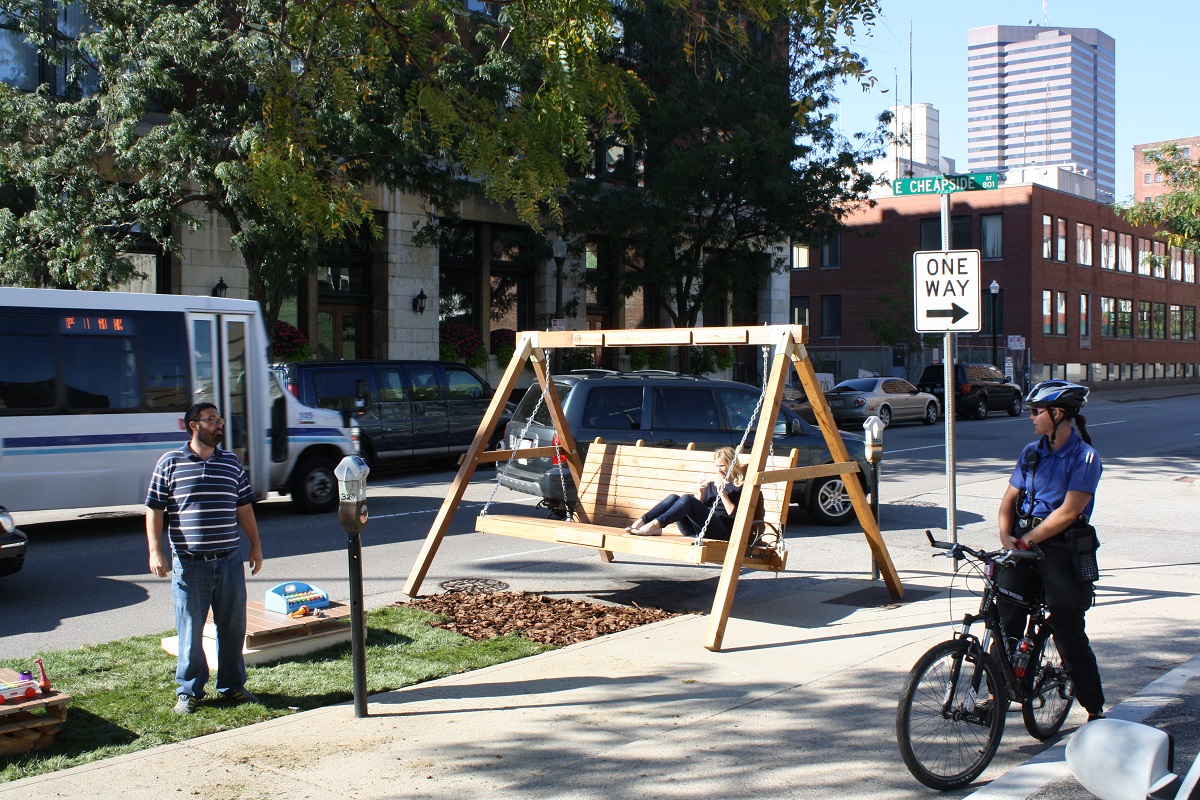
The idea to focus on how people interact with spaces is the evolution of a project that began in September 2016 with GBBN’s annual participation in PARK(ing) Day. PARK(ing) Day is an international event where individuals and groups take over public parallel parking spaces for a day and transform them into miniature parks called “parklets.” UrbanCincy has covered this event over the years.
Initially PARK(ing) Day was used as a vehicle to perform initial research on how people use and respond to pop-up lounge seating. After this years’ event, the firm continued the research by creating a series of pop-up interventions that presented other seating options and interactive exhibits and observed how people interacted to the options.
The EDGE gallery is a place to share GBBN’s research and participate in local design dialogue. The gallery name was inspired from the meaning of an ‘edge condition,’ which occurs where two or more distinct realms overlap and interface to create a unique situation. Conditions such as these allow for fertile and creative thought, and elicit unique challenges and opportunities to create lively discussions.
The exhibition will be held at the EDGE Gallery located at 332 East 8th Street in the 8th Street Design District from 6pm-9pm on Friday December 2. A Cincy RedBike station is conveniently located across the street. The gallery is also located along the #11, #16, and #64 Metro Bus routes and is two blocks from the 8th and Main Cincinnati Bell Connector stop.
The groundbreaking for the $11.1 million Marlowe Court development in College Hill shined new light on west side neighborhood, but the influx of new investment in the neighborhood’s walkable neighborhood business district has been growing for some time.
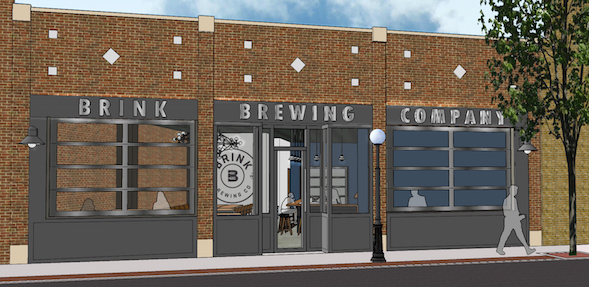
One of the next large investments will come in the form of a new brewery called Brink Brewing. While Brink is part of a larger craft beer movement that has been surging for years, it is part of a younger craft beer culture on the city’s west side; and the owners are hoping to tap into that otherwise untapped market.
“First and foremost we are aiming to serve beer lovers in and around the College Hill neighborhood,” John McGarry, marketing and design manager for Brink Brewing, told UrbanCincy. “Our sights are squarely focused on being a neighborhood-oriented tap room.”
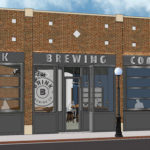
Brink Brewing Company [Provided]
While the Brink Brewing ownership, which includes four young couples, does not have any previous ties to College Hill, McGarry says that they were drawn to the neighborhood after discovering the passion of its residents and business owners. The walkable character of the neighborhood business district also made it an ideal choice for the Brink Brewing team.
“College Hill wasn’t part of our initial search, but as soon as we discovered it we fell in love,” said McGarry. “The stretch of Hamilton Avenue where we’ll be located is a walkable strip of small businesses with a proud past and a bright future. We met some of the other business owners there like Marty at Marty’s Hops & Vines and Megan at Fern and knew right away we should be paying attention.”
When asked about whether or not the local beer market is becoming over-saturated, he said that Brink Brewing is going after a different segment than what many other brewers are aiming for. Rather than trying to grow production and fight for tap and shelf space throughout the region, they are planning to settle into the neighborhood and serve it with high quality beer.
“From my perspective, I think brewery/taprooms are still a fairly new concept in Cincinnati. Places like Denver, Portland, and San Diego have shown that small, neighborhood focused breweries can really thrive and be a great addition to the community,” McGarry explained. “I think of brewery tap rooms much like local coffee shops, and you never hear anyone say that there are too many of those.”
Construction work is underway on transforming the 3,200-square-foot space, which will be complimented by a large outdoor patio space behind the building. After accounting for the space that will be needed for production, there should be enough room left over to accommodate 100 guests at any given time.
The amount of construction work taking place inside the 90-year-old structure is extensive. In addition to the resurfacing the front of the building through a façade improvement grant from the College Hill Community Urban Redevelopment Corporation, the interior has been completely rehabbed.
As part of the façade improvements, Brink Brewing will add a large commercial garage doors onto the front and back of the building to allow for the wall to open up on nice weather days – hopefully inviting more people from the neighborhood inside.
When it comes to the beer, McGarry says that the brewery will produce a range including pale ale, IPA, brown and stout beers. They will also serve some higher gravity and experimental beers, but will maintain a focus on core products.
“We will incorporate infusions and experimentations into some of our offerings, but we also recognize that the pendulum has swung a little too far into the exotic recently,” explained Kelly Montgomery, head brewer at Brink Brewing. “By frequently rotating our menu we feel there will always be something new to try along with the staples that have elevated craft beer.”
Since each of the young couples has young children, they say that they also hope the establishment will be family friendly. In order to help create this atmosphere, Brink Brewing will have a community table area and will even offer juice boxes, free wi-fi and board games.
The ownership group has signed a five-year lease on the space, which can be extended an additional 10 years. If all goes well, the team hopes that they can stay in the space for the long-haul.
“We want to be a part of revival of the Cincinnati beer tradition and become a part of the fabric of the neighborhood,” McGarry concluded. “We think our model of a modest-sized brewery and comfortable tap room to hang out in will allow us to do just that.”
Brink Brewing should open to the public sometime in November, and employ some 15 to 20 people within the next year or so.
 The walking tour is inspired by Cincinnati: A Guide to the Queen City and Its Neighbors, a book published in 1943 for the Federal Writers’ Project. This book was a part of the American Guide Series, also known as the WPA guides, which was a program funded by the New Deal to employ writers during the Great Depression. Today, the book serves as a snapshot of 1943 Cincinnati, when the city’s population was 455,610 and now-iconic structures like Carew Tower and Union Terminal were just a decade old.